
The Mechanism in One Paragraph
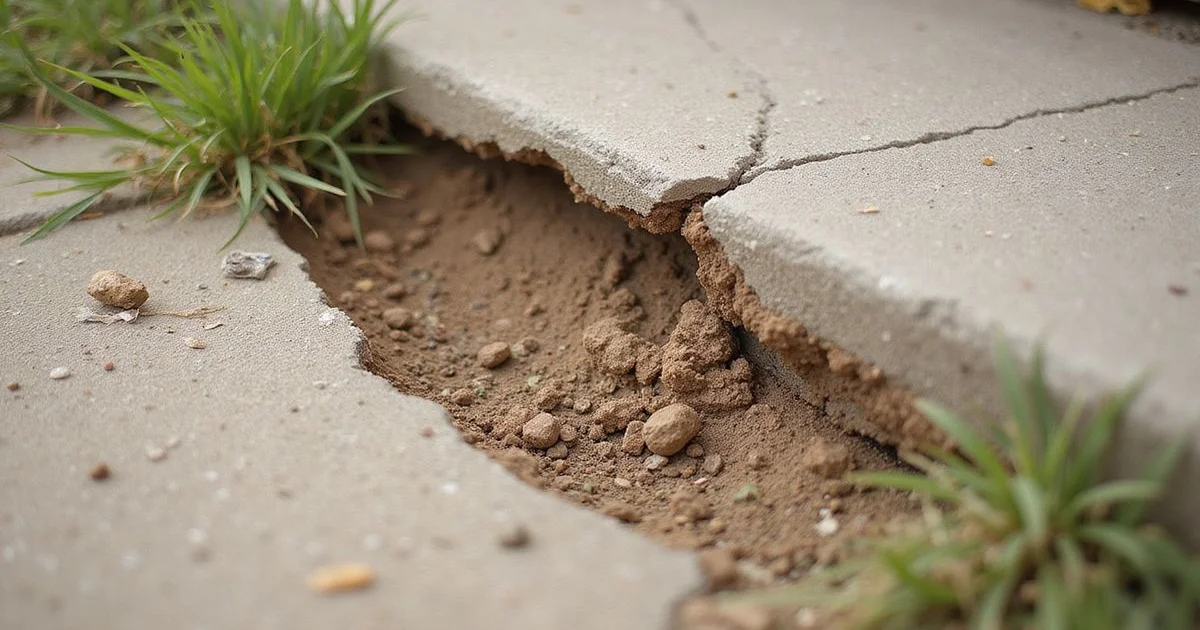
Certain clay minerals take water into their structure and expand. When they dry out, they release it and contract. Across a residential lot that volume change moves the soil supporting a foundation — up when wet, down when dry.
If it happened evenly across the whole lot, nothing would go wrong. The house would rise and fall as a unit and stay level. What distresses a structure is differential movement: one part of the foundation supported differently from another, forcing the building to span the difference.
Everything else on this page is detail hanging off that sentence.
Shrink-Swell Potential
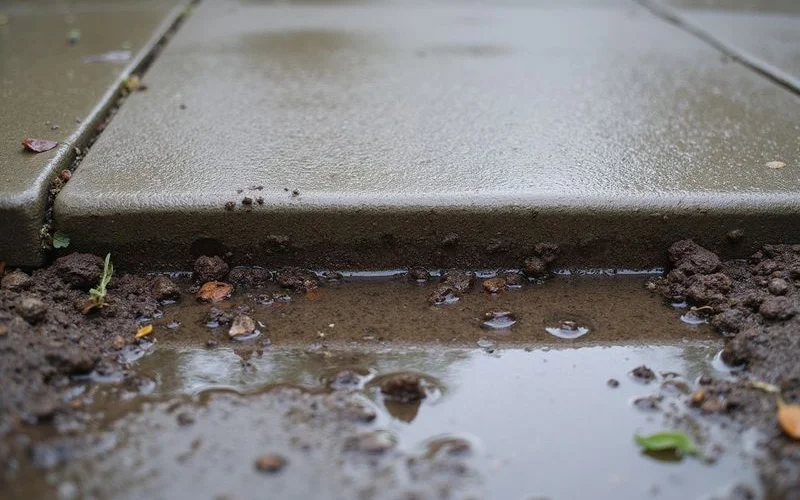
Not all clay behaves this way to the same degree. Shrink-swell potential describes how much a given soil changes volume with moisture content, and it varies between soil types.
Soils with high shrink-swell potential are widespread across the greater Houston area. Several of the mapped series in the region — described in USDA Natural Resources Conservation Service soil survey data — carry significant shrink-swell characteristics. Our guide on Houston soils and foundations covers what those maps do and do not report.
In plain terms, the more of these clay minerals present and the more the moisture content varies, the more the soil moves.
The Active Zone
Moisture content does not vary equally at all depths.
Near the surface, soil responds quickly to rainfall, evaporation, and plant uptake. Go deep enough and moisture content becomes relatively stable, insulated from weather at the surface.
The depth over which seasonal change drives meaningful volume change is the active zone. Above it, soil cycles. Below it, it does not, or does so far less.
This matters for two reasons. It explains why a shallow foundation bearing entirely within the active zone experiences the cycle directly. And it explains why foundation piers aim to transfer load to material below that zone, where support is more consistent. Our repair methods page covers how that transfer works.
Active zone depth is not a single number. It varies with soil type, climate, vegetation, and site conditions, and it is one of the reasons depth to refusal differs between properties and even across one lot.
Why the Change Is Uneven Around a House
This is the practical core of it, and it is not complicated once you see it.
Sun and shade. The south and west elevations of a Houston house bake in afternoon sun and dry faster than a shaded north side. Two sides of the same house, different moisture, all summer.
Trees and planting. A mature tree draws a substantial volume of water from soil. A large canopy close to one corner produces sustained localised drying there and nowhere else. Our tree roots guide covers this.
Drainage and discharge. A downspout emptying at one corner puts concentrated roof water into the soil there, repeatedly. The opposite corner gets nothing.
Irrigation. Systems are frequently uneven around a house — generous in the front bed, absent down the side. That is a moisture differential running on a timer.
Under-slab plumbing. A leak saturates soil continuously in one zone while the rest of the lot cycles normally.
Hardscape and cover. A patio or driveway shields the soil beneath it from both rainfall and evaporation, so it behaves differently from the adjacent open ground.
Each of these alone creates a difference. Several together, on the same house, produce exactly the uneven support that distresses a structure.
Settlement and Heave
These are the two directions and they distress a structure differently.
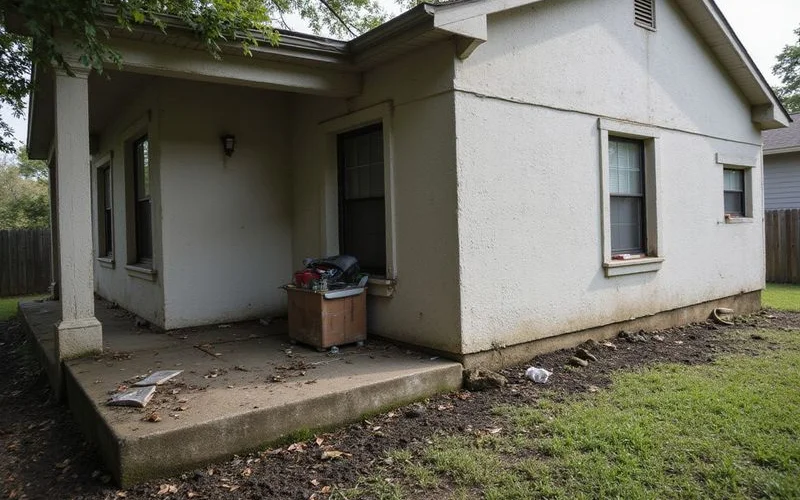
Settlement is downward. Soil has shrunk or been washed out, support has been withdrawn, and the foundation drops at that point. It is the mechanism most people picture.
Heave is upward. Soil has swelled and pushed. In Houston it is frequently associated with the centre of a slab rising relative to a dried perimeter, or with a localised area taking on water while the rest does not.
Distinguishing them matters because the pattern in the elevation survey tells you which you are dealing with, and the response differs. A low corner is not the same problem as a high centre, and treating one as the other produces the wrong scope. Our guide on what causes slab foundation movement works through the patterns.
Seasonal Versus Progressive
Houston’s climate cycles hard — extended dry stretches followed by substantial rainfall. Foundations on expansive clay cycle with it.
The practical consequence for a homeowner is that distress which opens during a dry summer and partly closes after a wet autumn is behaving seasonally. Distress that only ever gets worse, season after season, is behaving progressively.
Those are different situations, and telling them apart requires observation over time rather than a single look. This is why we recommend dated photographs, why we sometimes recommend measuring and re-measuring after a seasonal swing, and why a single inspection is less informative than two separated by a season.
What does not reverse is damage to brittle finishes. Cracked plaster stays cracked. Fractured tile stays fractured. And repeated cycling can produce cumulative movement that does not fully recover.
Regional Context, Local Cause
Two other regional factors come up in Houston conversations and it is worth placing them correctly.
Regional land subsidence lowers the land surface across broad areas. Where it is uniform beneath a lot, it does not distress a structure.
Published fault mapping shows approximate regional traces. Proximity on a map establishes nothing about a specific property.
Neither explains why one house on a street shows distress and its neighbour does not. Property-scale moisture variation does, which is why an evaluation records site conditions alongside the measurements.
What Follows From This
If the mechanism is moisture differential, then the things worth doing are the ones that reduce it: drainage that moves water away, consistent watering during dry spells, even irrigation, and awareness of what large trees are doing to the soil near the slab.
And if you have already noticed distress, the thing that tells you whether it matters is measurement. A foundation evaluation records the floor plane, maps the distress, and notes the site conditions that would explain it.