
What Maintenance Can and Cannot Do
Foundation maintenance is about moisture consistency. That is the whole idea, expressed in one sentence.
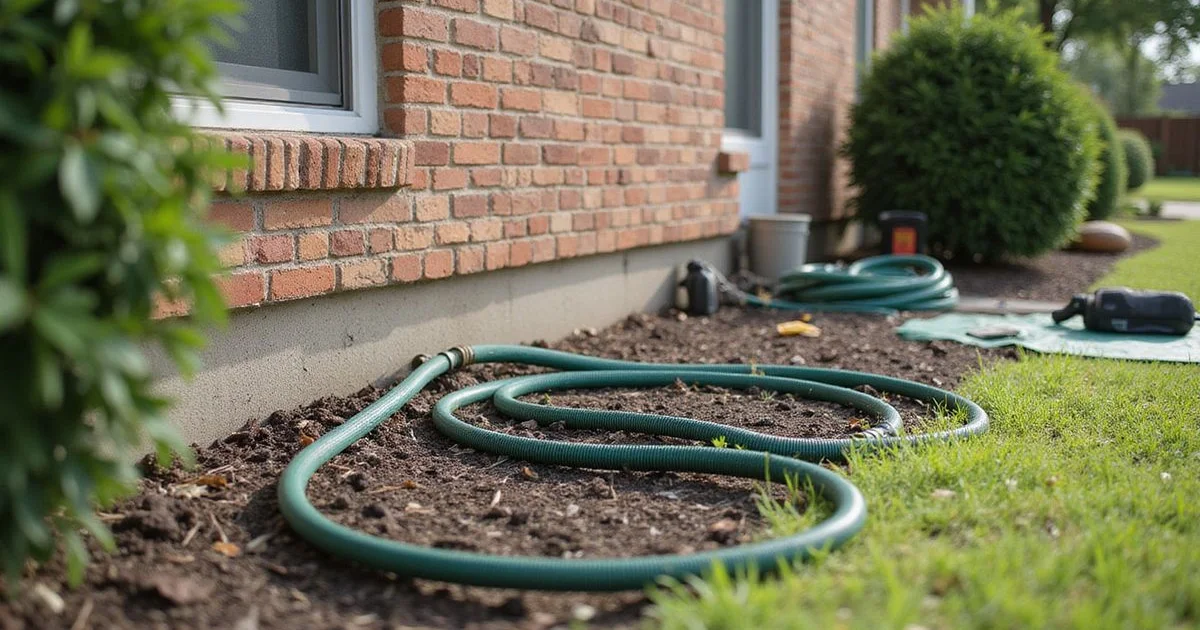
Houston sits on expansive clay that swells when wet and shrinks when dry. When that change happens evenly around a house, the structure moves together and nobody notices. When it happens unevenly — one side saturated, another baked dry — the support becomes uneven and the structure is forced to span the difference.
Most of what a homeowner can practically influence falls into that category. Where water goes, whether moisture stays reasonably even, and what is drawing moisture out of the soil near the slab.
What maintenance cannot do is override fill history, original construction, or an under-slab leak. It reduces one driver of movement. It is not a guarantee, and we will not present it as one.
The Practices That Matter Most
Extend your downspouts
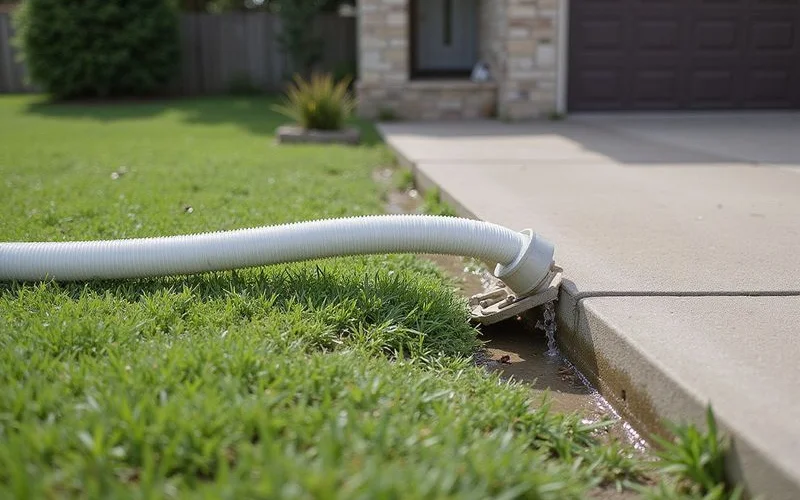
A roof collects a large volume of water and concentrates it at a handful of points. A downspout discharging at the slab edge delivers that entire volume into the soil immediately against your foundation, repeatedly, every time it rains.
Extending the discharge away from the structure is the cheapest, simplest, and most effective single thing most Houston homeowners can do. Check where each one currently empties. Several will surprise you.
Keep the grade falling away
Ground next to a house should fall away from it so water runs off rather than pooling. Grade settles over time, beds get topped up, and mulch accumulates until the fall reverses.
Walk the perimeter after heavy rain. Water standing against the slab more than a day afterward is telling you something. Our drainage page covers the corrective options.
Water consistently during dry spells
During Houston’s dry summers, clay contracts and withdraws support, and the effect is rarely even around a house — the sunny elevation dries faster than the shaded one. Consistent watering evens that out.
Consistency is the objective, not saturation. Too much water produces its own problems. Our foundation watering guide covers placement, timing, and how to avoid overdoing it.
Keep irrigation even
Irrigation systems are frequently uneven around a house — heavy coverage in the front bed, nothing down the side. That is a built-in moisture differential running on a timer. Check coverage and adjust.
Mind the trees
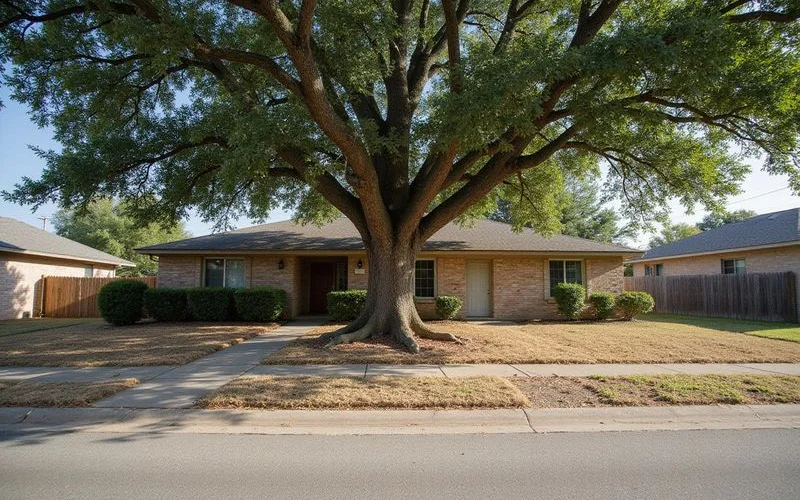
Mature trees draw substantial moisture from soil, and a large canopy close to a house affects the soil under and near the slab, particularly during dry periods. Our tree roots guide covers root barriers and what they do and do not achieve.
Removal is rarely the first answer. Trees are valuable, and removing a mature one has its own soil consequences as the moisture it was drawing stops being drawn.
Deal with leaks promptly
An under-slab plumbing leak saturates soil in one zone continuously. So does a leaking irrigation line, a dripping hose bib, or a failed sprinkler head against the foundation. A persistently wet patch in dry weather is worth investigating.
On raised foundations, watch the crawl space
Standing water or persistently damp soil under a raised floor drives wood rot and attracts termites. Check clearance, ventilation, and whether water is entering from outside. The crawl space guide covers what to look for.
A Seasonal Rhythm
Spring — after the wet season, check for pooling, check grade, clear gutters and downspout outlets, and check drain outlets are not blocked.
Summer — dry season. Start consistent watering before the soil visibly cracks rather than after. Check irrigation coverage. Watch for soil pulling away from the slab edge.
Autumn — the transition. Taper watering rather than stopping abruptly, so the soil does not swing straight from dry to saturated. Clear leaves from gutters and drain grates before the wet season.
Winter — quieter, but a good time to walk the perimeter and note anything for spring.
What to Watch For
Regular observation costs nothing and makes any future conversation more useful.
- Water pooling against the foundation more than a day after rain
- Soil visibly pulling away from the slab edge during dry spells
- Downspouts discharging at the foundation
- One side of the house persistently wetter or drier than another
- A wet patch that persists through dry weather
- Cracks changing — photograph them with a date and something for scale
Our warning signs page explains what those observations can and cannot establish, and how to document them properly.
Honest Limits
Maintenance will not overcome poorly consolidated fill under a slab. It will not fix an under-slab leak. It will not undo movement that has already happened, and it will not restore support that has already been lost.
What it does is reduce one meaningful driver of differential movement, which in Houston’s clay is worth doing. Think of it as managing the conditions rather than preventing an outcome.
If you have already noticed distress, maintenance is not the response — a foundation evaluation is, because measurement is the only thing that establishes whether what you are seeing matters.