
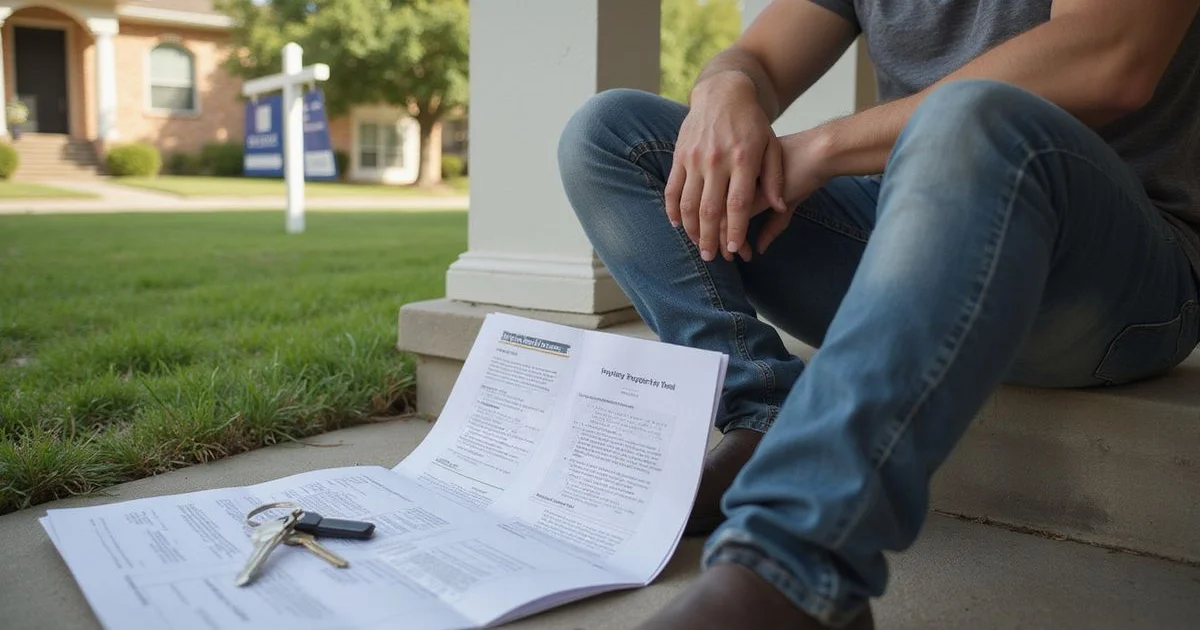
A Repair History Is Not Automatically Bad News
Houston has a lot of houses and a lot of expansive clay. Foundation repair is common here, and a home that has had work done is not automatically a home with a problem.
What separates a reassuring situation from a concerning one is documentation. A repair performed to a clear scope, with an assessment behind it, a warranty that still runs and can transfer, and records of what was actually done, tells you a great deal. A repair nobody can produce a single piece of paper about tells you nothing, and the gap is the problem rather than the repair.

The Document Checklist
Ask the seller for all of these. Each tells you something different.
The evaluation or assessment report. What findings prompted the work? Ideally this includes pre-repair elevation readings and distress mapping. If an engineer was involved, their report or letter.
The written scope. What work was proposed, by what method, at which locations, with what inclusions and exclusions.
The invoice. What was actually performed and paid for. Compare it against the scope — differences are worth asking about.
Post-repair elevation readings. What the floor plane measured after the lift. Together with pre-repair readings, this is the clearest record of what the work achieved.
Plumbing test results. Where a hydrostatic test was performed after a lift, the result. Where one was not, that is worth noting.
The warranty document. Not a summary. The actual terms, including coverage, exclusions, period, transferability, transfer fee, and the transfer window.
Permit and inspection records. Where the work required them.
Who performed it and when. The company name and date, so you can establish whether they still trade and whether the warranty is live.
Warranty Transfer: The Detail That Catches People
This is where buyers most commonly lose value, and it is entirely avoidable.
Many foundation warranties are transferable, and many require the transfer to be completed within a defined window after the sale, usually with a fee. Miss the window and coverage is gone, even though the work was performed and the period has not expired.
So: read the transfer terms during the option period, not after closing. Note the deadline. Budget the fee. Complete the transfer.
Also check how many transfers are permitted. Some warranties transfer once. If the current seller was themselves a buyer who took a transfer, the warranty may have already used its one transfer.
Our warranty guide covers what to look for in the document itself.
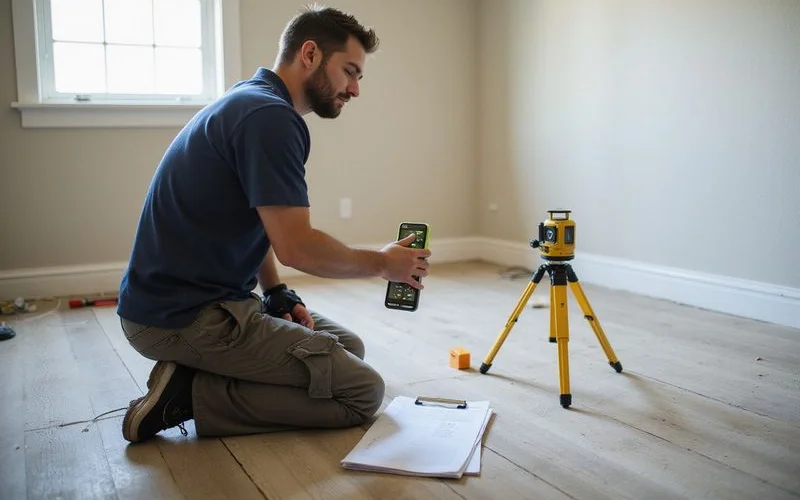
What an Evaluation Can and Cannot Confirm
This distinction matters and it is frequently misunderstood.
What an evaluation can do: measure the current relative floor elevation, map current visible distress, record current site conditions, and give you a documented snapshot of the property as it stands today. Compared against the seller’s post-repair readings, it can show whether the floor plane has changed since the work.
What an evaluation cannot do: verify another contractor’s workmanship, confirm how many piers were installed or to what depth, inspect below the slab, or certify that past work was performed correctly. Those things are not visible without destructive investigation or records.
If you need a certification about past work — because a lender, a party to the transaction, or a dispute requires it — that is an engineer’s scope, not a contractor’s. The contractor versus engineering assessment guide explains the difference.
For Sellers
The work is easier if you do it before listing.
Gather the documents now: assessment, scope, invoice, post-repair readings, warranty, permits. Put them in one folder. Confirm whether the warranty transfers and what the terms are, and check the company still trades.
Then disclose accurately. Texas sellers have disclosure obligations, and your agent will advise on the specifics. What helps commercially is being able to hand a buyer a complete, organised record rather than a vague recollection. A documented repair with a live transferable warranty is a much easier conversation than “I think they put some piers in around 2019”.
If you have no records, consider getting a current evaluation yourself so at least the present state is documented.
What to Do During the Option Period
- Request the full document set from the seller
- Read the warranty transfer terms and note the window and fee
- Arrange a foundation evaluation so you have current measured findings
- Compare current readings against any post-repair readings the seller has
- Ask about anything in the invoice that does not match the scope
- If a stamped opinion is required by a party to the transaction, engage an engineer
- Decide, with measured information rather than assumption in either direction
The Balanced View
Buyers sometimes walk away from any house with a repair history, and sometimes accept one without asking a single question. Neither is a good approach.
A documented, warranted repair means a known problem was identified, addressed to a stated scope, and recorded. That is arguably more information than you have about the house next door that has never been measured.
What deserves genuine caution is a repair with no records at all, a warranty that cannot be produced, work performed by a company that no longer exists, or a scope that does not match the invoice. Those are the situations worth pressing on.