What Under-Slab Tunneling Is
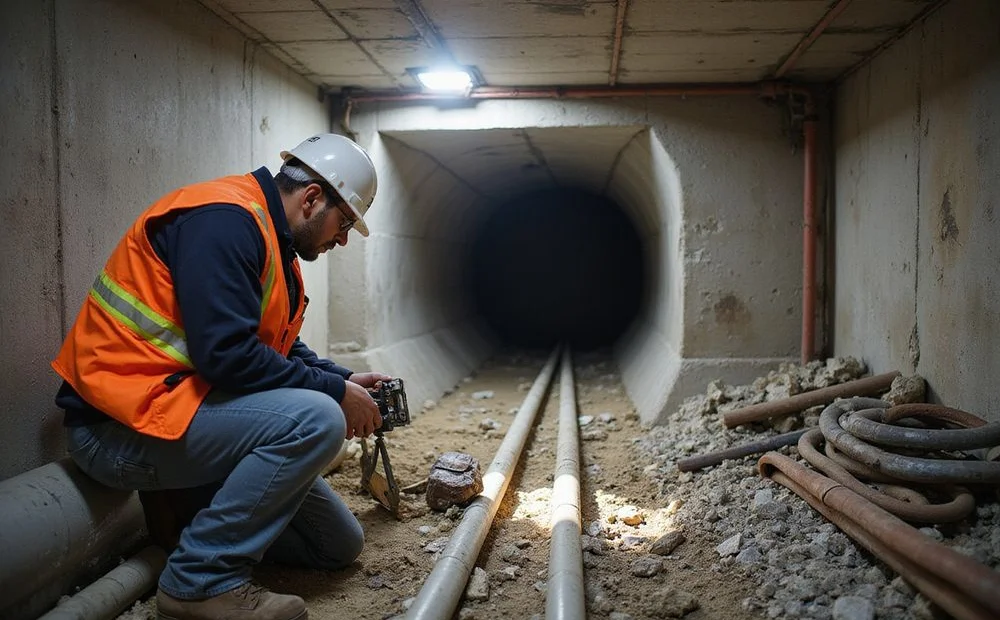
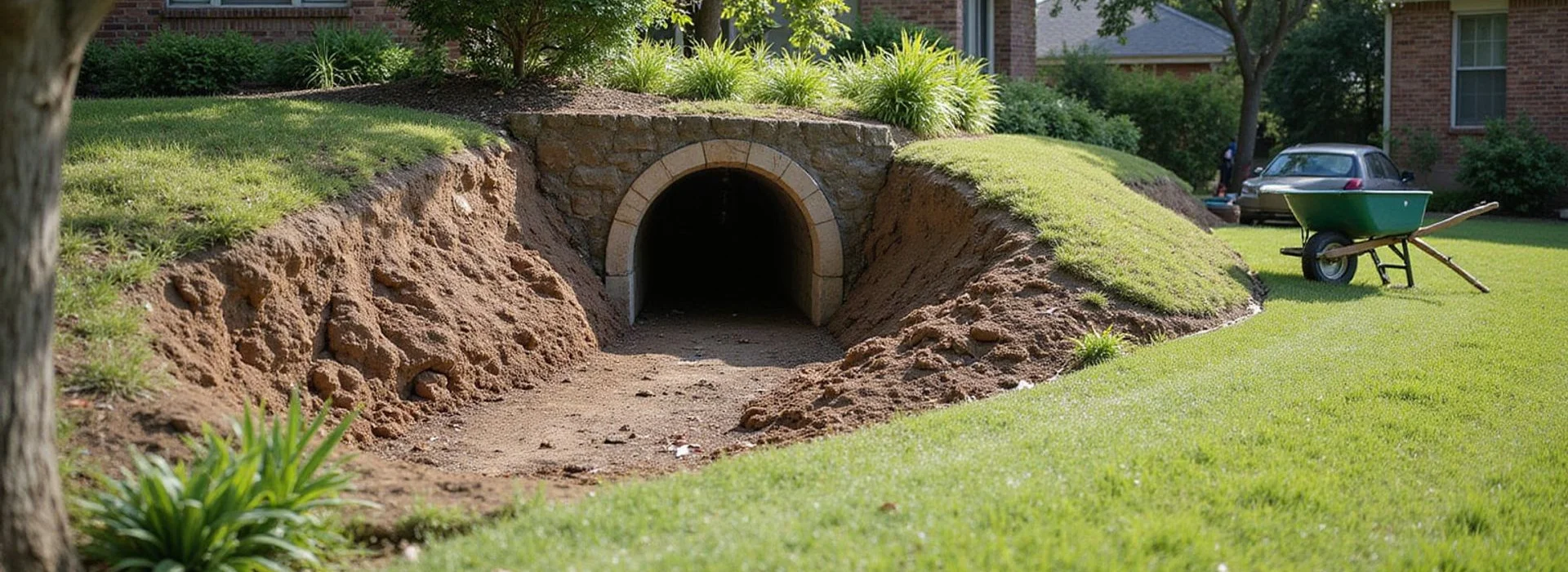
Under-slab tunneling excavates an access tunnel from outside the house, running beneath the concrete slab, so work can be carried out underneath without breaking through the interior floor.
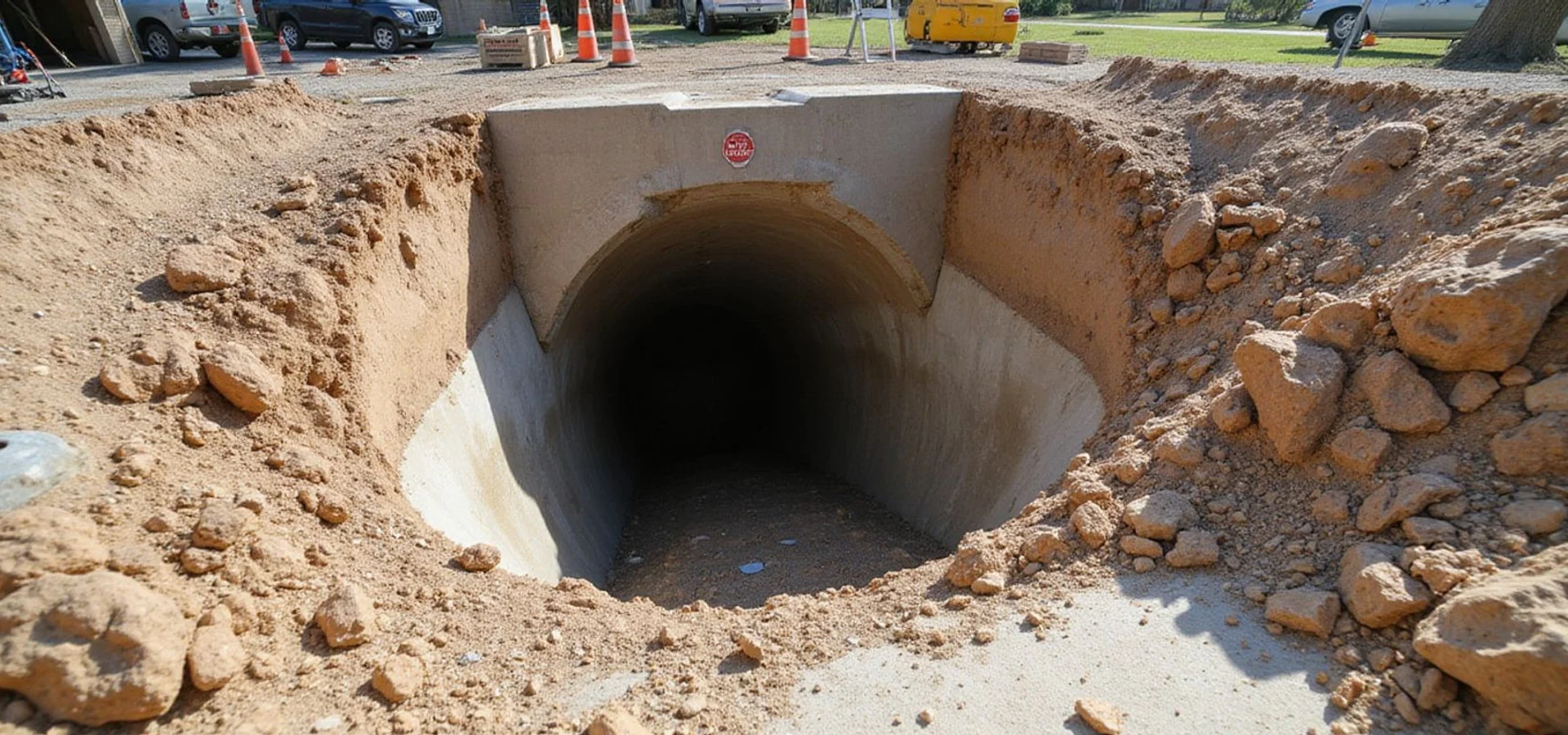
It is a specialised access method rather than a standalone scope, used alongside our other foundation repair work in Houston. The tunnel starts as an excavation at the perimeter and advances horizontally under the slab toward the work area, shored as it goes. Once the work is complete, the tunnel is backfilled in compacted layers and the surface restored.
We provide this where the project warrants it. The most common reason is under-slab plumbing — a failed drain line, an aged cast iron system being replaced, or a leak needing repair where it sits. Occasionally it provides access to pier locations during slab foundation repair that cannot practically be reached another way. Whether a tunnel is warranted at all comes out of the foundation evaluation, not from the symptom.
Tunnel or Break Out? The Real Decision
There are two ways to reach something under a slab, and both are legitimate.
Interior break-out removes floor covering, cuts and breaks through the slab at the necessary points, does the work, then patches the slab and reinstates the finish. The work happens inside your house.
Tunneling keeps everything outside. Your floors are never touched.
| Tunneling | Interior break-out | |
|---|---|---|
| Where the disruption sits | Yard | Living space |
| Floor finishes | Untouched | Removed and reinstated |
| Living in the house | Generally unaffected | Dust, noise, restricted rooms |
| Typical duration | Longer | Shorter for a short run |
| Restoration | Landscaping, hardscape | Slab patch, flooring |
| Best where | Long run, multiple rooms, expensive floors | Short run, single point, simple floor |
The honest comparison includes the interior finish reinstatement on the break-out side. Comparing excavation cost against demolition cost alone misses the flooring, which is frequently the larger number on a house with tile or hardwood.
Where the line is shallow, short, and under an inexpensive floor, break-out is often the sensible choice and we will say so.
How the Work Runs
Route planning
The route is planned before anything is dug. Grade beams — the stiffened thickened sections of the slab that carry a substantial share of the load — are located and the tunnel is routed between and around them rather than undermining them. The path is chosen for the shortest practical run to the work area consistent with those constraints.
Utility locates
Existing utilities are located before excavation begins. Gas, electrical, water, irrigation, and communication lines all need identifying. This is basic practice and it is skipped more often than it should be.
Excavation and shoring
Excavation begins at the perimeter and advances under the slab. The tunnel is shored as it goes, supporting the ground and keeping the excavation stable while work proceeds. Shoring is part of the scope, not an optional extra.
Excavated soil is stockpiled on site for controlled backfill rather than hauled away and replaced with imported fill.
Coordinated work
Plumbing repair or pier work is carried out through the tunnel. Where a licensed plumber is performing the plumbing scope, the schedule is coordinated so the tunnel is open when the work happens and not longer than necessary. Inspections are sequenced in where they apply.
Backfill and restoration
This is where careless work causes problems later. Backfill is placed in layers and compacted, not pushed back in bulk. Loose backfill leaves voids, and a void under a slab is exactly the condition that causes settlement — directly above the tunnel someone just dug.
The surface is then restored to the standard stated in the scope, and settlement over the run is monitored afterward.
What Gets Disturbed
The route above the tunnel is affected and the proposal states what that includes:
- Sod and planting beds on the route
- Shrubs and smaller plants, removed or replaced
- Irrigation lines crossing the route
- Hardscape — pavers, edging, walkways — where the route passes beneath
- A working excavation at the tunnel entrance
Mature trees on the route are a specific conversation. We plan around them where possible; where we cannot, that goes in the scope before you decide rather than being discovered on the day.
Timeline
A short access run to reach a single point can be days. A longer run reaching an interior line, including the plumbing work and any required inspection, more commonly runs one to three weeks from first excavation to final restoration.
What extends it: groundwater requiring dewatering, obstructions on the route, hard or unstable soil, weather, and the inspection schedule. Our proposal states an estimated timeline and names what would extend it.
Plumbing Coordination
A licensed plumber performs plumbing work. Our scope is the access — excavation, shoring, the working environment, backfill, and restoration — and the coordination that keeps the sequence tight.
Whether the plumber is engaged directly by you or coordinated through us is set out in the proposal, along with what each party is responsible for and who schedules the inspection. Keeping that boundary explicit avoids an open tunnel sitting idle while two parties wait on each other.
Where under-slab drainage has been worked on, a hydrostatic test after completion is normal and is often required before sign-off.
When Something Unexpected Turns Up
Groundwater and obstructions both happen. Groundwater is managed with dewatering, which slows progress and adds cost. Obstructions — grade beams where they were not expected, undocumented utilities, old footings, buried debris — may require rerouting, which changes tunnel length and scope.
Where a condition arises that changes the scope, it is documented and agreed in writing before the work proceeds. Route planning and utility locates exist to reduce how often this happens, not to guarantee it never will.
What Drives the Cost
- Tunnel length and depth
- Soil conditions and stability
- Shoring requirements over the run
- Groundwater management where needed
- Obstructions and rerouting
- Restoration extent, including hardscape
- Permits and inspections
Tunneling is a significant scope. That is exactly why the tunnel-versus-break-out decision deserves proper consideration rather than a default.
What You Receive
The assessment and route plan, a written scope covering method, inclusions, exclusions, restoration standard, schedule, and payment terms, coordination documentation with any other trade involved, inspection records where permits applied, and the transferable written warranty covering our scope with its limits stated.