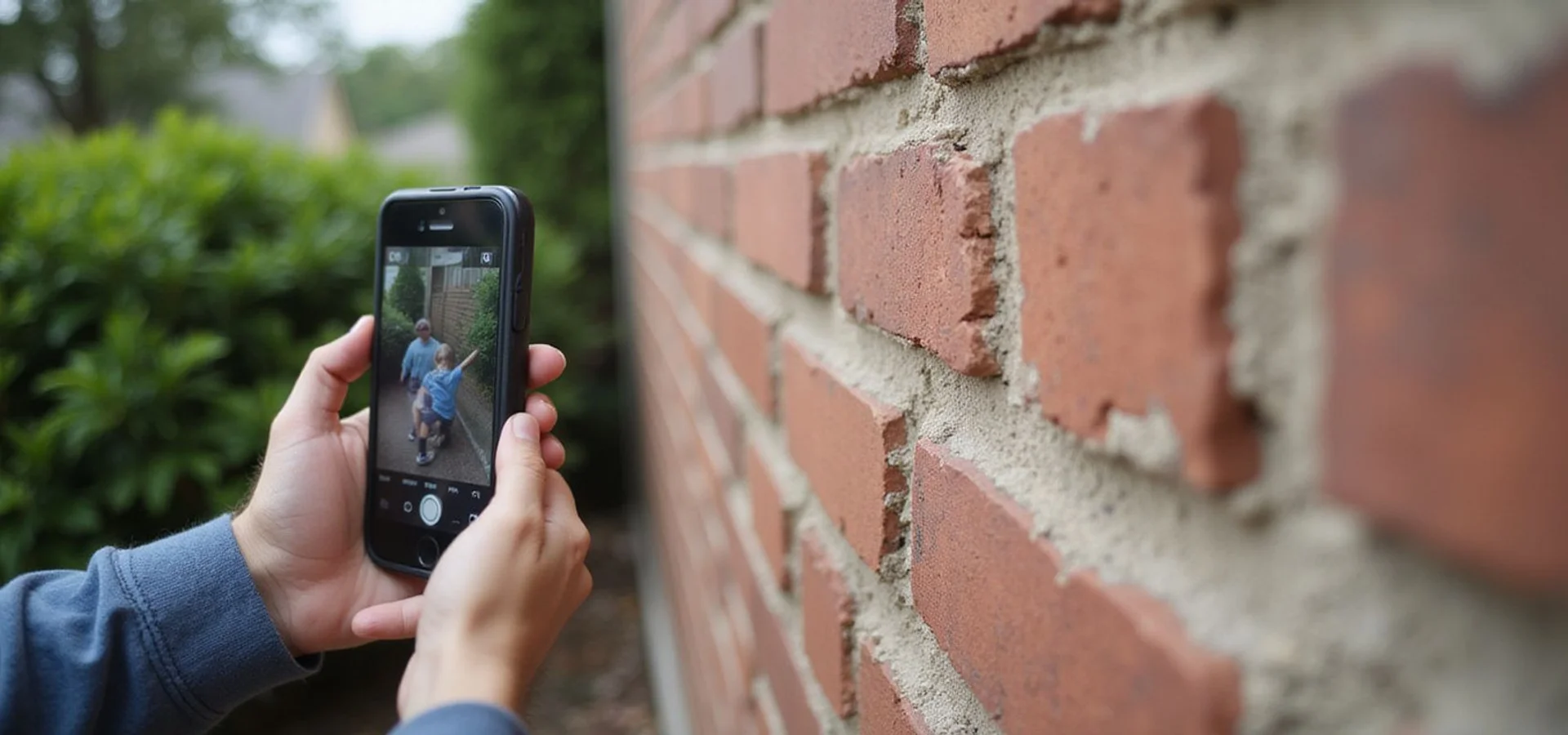
Homeowner photographing a stair-step mortar crack on the exterior brick of a Houston home
Houston, TX & surrounding communities

Common Foundation Warning Signs Houston Homeowners Ask About

The observations Houston homeowners ask about most — brick cracks, interior cracks, sticking doors, uneven floors — and how to document them properly.

Findings explained first Written scope & exclusions Transferable warranty
4.9 (180+ reviews)
Google verified
Response Within 24 Hours
Transferable Written Warranties

Start Here: Observation Is Not Diagnosis

You have noticed something. A crack has appeared, a door has started catching, a floor feels like it slopes. The question you want answered is whether it matters.

This page will not answer that, and neither will any page. What it will do is explain what you are looking at, what an assessment considers, what to document, and what appearance alone cannot establish — the same starting point we use for foundation repair in Houston generally. That is genuinely useful, and it is honest about its limits.

Two things we will not do here:

  • We will not diagnose from a photograph. Photographs show what a crack looks like. They cannot show floor elevation, distress pattern across a structure, site conditions, or history.
  • We will not give you a crack-width rule. No width separates safe from serious. The figures that circulate are marketing heuristics, not engineering criteria.

The Observations Homeowners Ask About

Brick and mortar cracks

Stair-step cracking following mortar joints, vertical cracks at corners or above openings, separation at the frieze board, and gaps where a porch or garage meets the main structure. Mortar is weaker than brick, so movement in a veneer tends to express along the joint line.

Read the brick and mortar cracks guide.

Interior wall cracks

Diagonal cracks radiating from door and window corners, separation at ceiling-to-wall seams, cracks running along a taped joint, and nail pops. Corners are stress concentrations, which is why they crack first regardless of the cause.

Read the interior wall cracks guide.

Sticking doors and windows

Doors that rub, will not latch, or swing on their own. Windows that stick or will not lock. Where it binds is informative, and so is whether it recovers seasonally.

Read the sticking doors and windows guide.

Uneven and sloping floors

A slope you can feel walking across a room, a ball that rolls on its own, gaps opening where the baseboard meets the floor, cracked floor tiles along a grout line, and floors that feel springy underfoot on a raised foundation.

Read the uneven floors guide.

Outside the house

Soil pulling away from the slab edge during dry spells. Persistent water pooling near foundations after rain, rather than draining away within a day. Downspouts discharging at the slab. Cracks in a driveway or patio that has settled. These are site observations rather than structural findings, but they are part of the picture.

Why Appearance Alone Cannot Settle It

Every observation above has multiple possible explanations.

Sheetrock cracks from framing shrinkage as lumber dries out. Concrete cracks as it cures and keeps doing so for years. Mortar cracks from thermal movement. Tile cracks over a control joint doing what a control joint is designed to do. Plaster cracks because plaster is brittle. Doors bind because wood swells in humidity. Floors slope because a 1925 house was built on hand-set piers and has never been level.

All of those look like foundation problems to a worried homeowner. Some of them are. Distinguishing them requires the thing appearance cannot provide: a measurement of the floor plane and a pattern to weigh the visible distress against.

What Actually Carries Information

Four things, and none of them is crack width.

Location. Where the distress sits on the structure and which elevation it is on.

Orientation. Which way a crack runs, and whether the wall is displaced in or out of plane at it.

Pattern. Whether distress appears at several points consistently on one side, or in isolation. Whether interior and exterior distress correspond.

Change over time. Whether it is progressing, stable, or cycling with the season. This is the most informative of the four and the one homeowners are best placed to capture.

How to Document Properly

This is the part you can do yourself, starting today, at no cost.

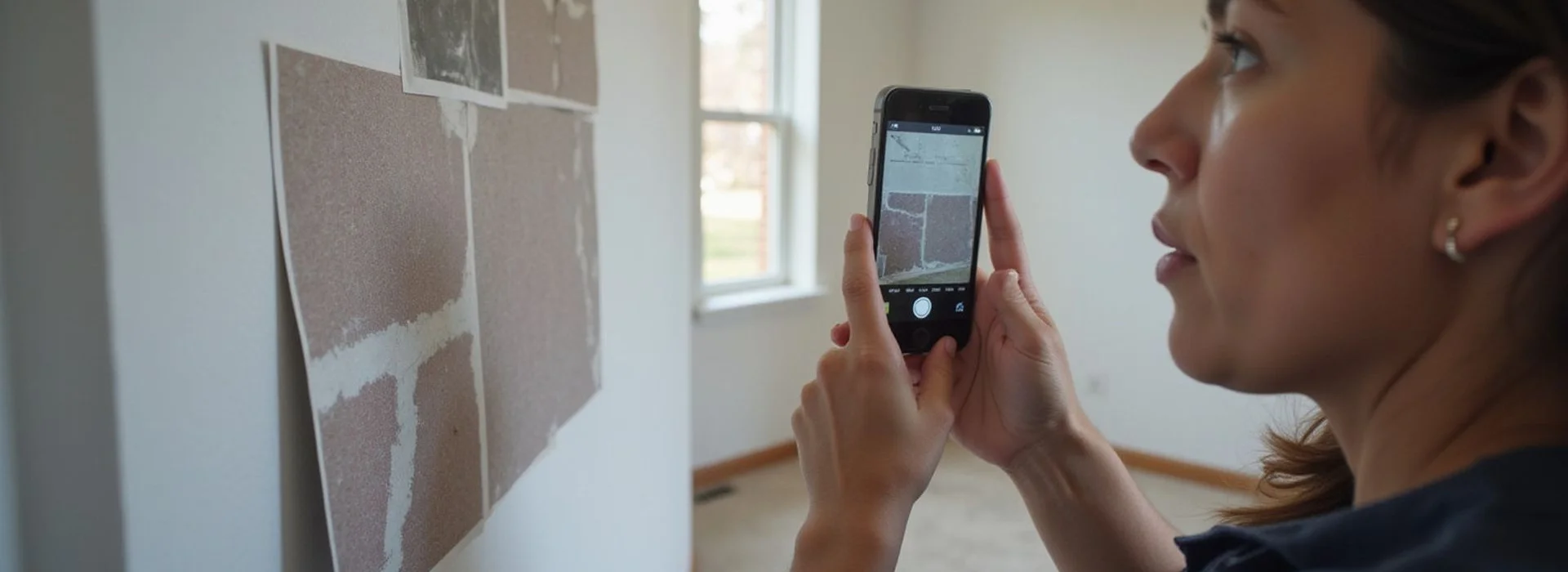
Photographs

  • Include something for scale right beside the crack — a coin, a ruler, a tape
  • Shoot from a consistent position and distance; note where you stood
  • Take a wider shot showing where on the wall it sits, as well as the close-up
  • Make sure the date is captured, in the file or written down
  • Repeat roughly quarterly, which captures the seasonal cycle

Written notes

  • What you noticed and approximately when it started
  • Which doors and windows have changed and how they bind
  • Anything else that happened: plumbing work, a tree removed or planted, irrigation changes, an unusually dry summer, a previous repair
  • Whether it has got worse, stayed the same, or improved

The written record is often more useful than the photographs, and it is the thing people wish they had started sooner.

Seasonal Movement: The Houston Pattern

Clay soils in the Houston area shrink during dry periods and swell during wet ones. A house sitting on them moves with that cycle.

The practical consequence is that distress which opens through a dry summer and partly closes after a wet autumn is behaving differently from distress that only ever worsens. Watching through one full cycle, with dated photographs, gives you a comparison that a single inspection cannot.

This is also why we sometimes recommend measuring, waiting a season, and measuring again. Two surveys separated by a seasonal swing tell you about progression. One survey tells you about a moment.

When to Stop Watching and Get It Measured

Documenting through a seasonal cycle is a reasonable response to a hairline crack. These situations warrant measuring sooner:

  • Distress visibly progressing over weeks rather than months
  • Doors or windows that have stopped functioning and have not recovered with the season
  • A floor slope you can feel that was not there before
  • Multiple observations appearing together on the same elevation
  • You are buying or selling the property
  • You have been told something alarming and want it checked independently

What a Measurement Adds

A foundation evaluation runs a relative elevation survey across the floor plane against a benchmark datum, maps the visible distress by location and orientation, and records site conditions. The output is figures and a documented pattern rather than an impression.

Crucially, monitoring is a legitimate outcome. If the readings do not support repair, the report says so, tells you what to watch, and recommends when to re-measure. You keep the readings either way, and they become the baseline against which the next survey is genuinely comparable.

What This Page Cannot Tell You

Your foundation’s condition. That requires measuring your floor, looking at your property, and understanding your history.

What it can do is put you in a better position for that conversation: knowing what to document, knowing which questions actually matter, and knowing that a contractor who diagnoses your house from a photograph is guessing.
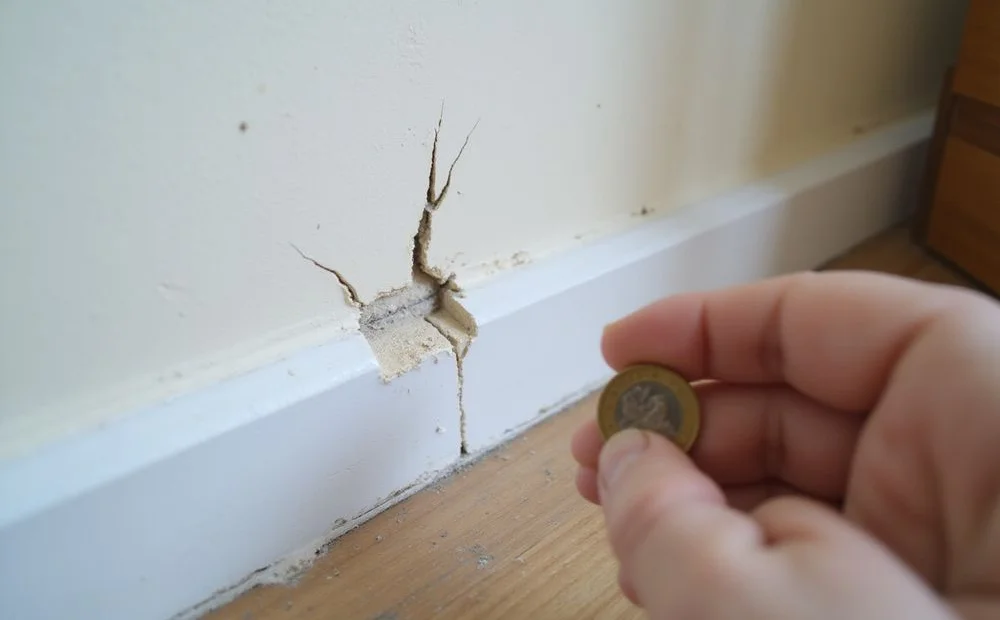
Diagonal drywall crack radiating from a door corner with a coin for scale

What's included in the scope

  • Overview of common exterior and interior observations
  • How to document what you're noticing
  • Separating observation from diagnosis
  • What appearance alone cannot establish
  • A clear path to a foundation evaluation
Why choose us

Why Choose Houston Foundation Repair for Warning Signs?

The same standard applies to every service: measure first, explain the findings, then put the scope in writing.

We do not diagnose from photos

Photographs show what a crack looks like. They cannot show floor elevation, pattern, or history. We say so instead of guessing.

No universal crack-width rule

There is no width that separates safe from serious. Anyone quoting one is using a rule that does not exist.

Documentation advice, free

Most of this page is about what you can do yourself before anyone visits. That is deliberate.

Monitoring is a real outcome

If the readings do not support repair, the report says to monitor and re-measure. That happens regularly.

Seasonal behaviour explained

Houston clay cycles. Distinguishing seasonal movement from progression is the useful skill, and we explain it.

Measured, not guessed

Every evaluation produces figures you keep, which become the baseline for whatever you check next year.

Process

How Does Warning Signs Work?

What happens, in what order, and what you receive at each stage.

STEP 01

Notice and note

Write down what you have seen and roughly when it started. Memory gets vague fast, and the timeline matters.

STEP 02

Photograph properly

Dated photographs from a consistent position, with something for scale. A coin beside a crack beats a close-up with no reference.

STEP 03

Watch a seasonal cycle

Houston clay moves seasonally. Distress that opens dry and closes wet behaves differently from distress that only worsens.

STEP 04

Get it measured

A relative elevation survey turns an impression into figures. That is the step no amount of looking replaces.

Have a question about warning signs?

Call the office or send the details through. We explain what it may involve before anything is scheduled.

Our work

Warning Signs in the Field

Illustrative images of the work types described on this page. Click any image to view it larger.

Images are illustrative of the work types described and are not presented as documented before-and-after proof of a specific customer project.

Comparison

How Houston Foundation Repair Compares

What to check Typical provider Houston Foundation Repair
Response to a photoA diagnosis over the phoneContext and a recommendation to measure
Crack-width rule'Anything over a quarter inch is serious'No universal rule; pattern and change matter
Seasonal contextNot raisedExplained, with re-measurement suggested
Documentation adviceNot offeredPublished, so you can start before we visit
Possible outcomesRepairRepair, monitoring, or another trade entirely
BaselineNoneElevation readings you keep

"Typical provider" describes a general industry baseline, not any named competitor.

Reviews

What Customers Say About Our Warning Signs

4.9 out of 5 across 180+ reviews
"Told us plainly that our cracks were seasonal and to re-measure after the wet season. That saved us a lot of money."
MMichelle O.Fairfield, Cypress
"The evaluation didn't try to sell me a repair I didn't need. They documented the readings and told me what to watch, which I respected."
TTom R.Katy
"I asked about the fault map and got an actual explanation of what it is and isn't. Refreshing."
KKelsey W.Klein, Spring

Reviews reflect individual customer experiences. Outcomes depend on the property, the documented scope, and site conditions.

Got questions?

Warning Signs FAQs

Does every crack mean my foundation needs repair?

No, and this is the single most important thing on this page. Many cracks in Houston homes are cosmetic, seasonal, or the product of original construction rather than ongoing foundation movement. Sheetrock cracks from framing shrinkage as lumber dries. Hairline cracks appear in concrete as it cures and continue appearing for years. Mortar cracks from thermal movement in a brick veneer. Tile cracks over a control joint doing exactly what a control joint does. Plaster cracks in an older home because plaster is brittle and the house is not. All of those look like foundation cracks to someone worried about their foundation. What separates an observation from a finding is not how the crack looks. It is whether the floor plane is actually out, in what pattern, and whether the visible distress is consistent with that pattern. A relative elevation survey establishes the first two. Site conditions and history inform the third. Appearance alone cannot do any of it, which is why we will not tell you over the phone whether your crack is serious.

How wide does a crack have to be before it's serious?

There is no such width, and anyone quoting one to you is using a rule that does not exist in any defensible form. You will find figures circulating — a quarter inch, an eighth of an inch, a credit card thickness — and they are marketing heuristics rather than engineering criteria. A hairline crack that has appeared recently and is lengthening steadily may be more informative than a wider crack that has been stable for fifteen years. A narrow crack in a specific location and orientation may indicate something a wide crack elsewhere does not. What actually carries information is location, orientation, pattern across the structure, and change over time. A stair-step crack at a corner reads differently from a vertical crack in the middle of a wall. Distress that appears at several door corners on one side of a house reads differently from a single crack in isolation. And a crack that measured the same last spring as it does this spring is behaving differently from one that has doubled. This is why we ask you to document with dates and a scale reference, and why re-measurement matters more than a single measurement.

What should I photograph and how?

Take photographs you can genuinely compare later, which takes slightly more thought than a quick snap. Include something for scale in the frame — a coin, a ruler, a tape measure — right beside the crack, because a close-up of a crack with no reference is almost useless for comparison. Photograph from a consistent position and distance, and make a note of where you stood so you can return to the same spot. A wider shot showing where the crack sits on the wall matters as much as the close-up, because location is information. Make sure the date is recorded, either in the file metadata or by writing it down. Then repeat the exercise on a schedule: roughly quarterly is sensible in Houston, because that captures the seasonal cycle. Alongside the photographs, keep a short written note of other observations: which doors have started catching, when you first noticed, whether anything changed after a plumbing repair or a tree removal or a very dry summer. That written record is often more useful than the images.

Do these signs mean the same thing in every house?

No, and treating them as universal is how people end up with unnecessary repairs. The same observation means different things depending on the foundation type, the age and construction of the house, what has happened to the property before, and the site conditions around it. A sloping floor in a 1925 pier-and-beam bungalow that has never been level is not the same finding as a sloping floor that has developed over two years in a 2015 slab home. Sticking doors in a house with plaster walls during a humid week behave differently from sticking doors that have persisted through a full year. A crack above a window in a brick veneer means something different from a crack in a structural masonry wall. Context is why an evaluation involves history, site conditions, and foundation type alongside the measurements, and why a photograph sent to a contractor cannot substitute for it.

Should I fill or seal the cracks I can see?

Have them evaluated first, then seal them if that is the appropriate answer. Sealing a crack hides the symptom. If the crack is genuinely cosmetic, sealing is fine and appropriate maintenance. If it is an indicator of movement, sealing removes your ability to track whether it is changing, which is the most useful information available to you. A sealed crack that reopens tells you something, but you have lost the interval in between. There is also a sequencing point: cosmetic repair after structural stabilisation is normal work, and cosmetic repair before it usually has to be redone. Recurring cracks after patching, where the same line reopens in the same place, are themselves informative. They suggest the underlying movement is still active rather than resolved, which is worth reporting at the next evaluation rather than patching again. If a repair is likely, doing the cosmetic work first wastes money.

My doors are sticking. Is it the foundation or the humidity?

It can be either, and the distinguishing test is seasonality. Wood swells with humidity, and Houston humidity varies enormously through the year. A door that binds during a humid stretch and operates normally when things dry out is behaving like wood responding to moisture. A door that has bound and stayed bound regardless of season, or that has progressively worsened over a year or more, is more consistent with the frame moving out of square. Where it binds is also informative: a door rubbing at the top on the latch side suggests a different geometry from one rubbing along the entire latch edge. Note which doors, where they rub, when it started, and whether it recovers. Our sticking doors and windows guide covers what to look at.

Are stair-step cracks in brick always serious?

Not always. Stair-step cracking follows mortar joints because mortar is weaker than brick, so movement in a brick veneer tends to express itself along the joint line. That pattern is common where there is differential movement, but it also appears from thermal expansion and contraction, from settlement of a veneer ledge, and from original construction issues. What matters is where the stair-step sits, which direction it runs, whether the wall is displaced in or out of plane at the crack, whether it corresponds to interior distress in the same area, and whether it is changing. A stair-step that has been stable for a decade with no interior counterpart reads differently from one that appeared last year alongside interior cracking on the same elevation.

Can I measure my floor slope myself?

You can get an impression, and it is worth doing. Rolling a ball or a marble across a floor tells you whether there is a noticeable fall and roughly where. A long spirit level will confirm a slope over its own length. What neither gives you is a relative elevation survey across the whole floor plane referenced to a benchmark, which is what establishes the pattern — where the high point and low point are, how the transition happens, and whether it is a single tilt or a bowl or a ridge. That pattern is what distinguishes settlement from heave, and it is what a survey provides. Your own check is useful for deciding whether to have it measured. It is not a substitute for the measurement.

What if the signs appeared right after heavy rain or a drought?

Timing is genuinely useful information and worth recording, but it does not establish a cause on its own. Houston clay responds to moisture, so it is entirely expected that distress becomes more noticeable after an extended dry spell or a prolonged wet period. Distress that appears in one and partly recedes in the other is behaving seasonally. Distress that appeared after a storm is not thereby proven to be storm damage — the storm may have made existing movement visible rather than causing it. We record the timing alongside the measurements and treat it as context rather than as a conclusion.

What if I think it might be a plumbing leak?

A wet patch on the floor, a warm spot, unexplained water usage, or persistently damp soil in one area can all point toward an under-slab plumbing issue. None of them proves one. A plumbing slab leak and a structural foundation problem are different issues needing different assessments, and they sometimes occur together. Where leak symptoms dominate, a plumbing assessment usually comes first, because ruling a leak in or out changes what the structural picture means. We will tell you which sequence makes sense rather than selling you the assessment we happen to perform.

How long should I watch before doing something?

There is no universal answer, but a seasonal cycle is the useful unit in Houston. Distress that opens through a dry summer and partly closes after a wet autumn is telling you something different from distress that has only ever got worse. Documenting through one full cycle, with dated photographs and a written note of door operation, gives you a real comparison. That said, if distress is visibly progressing over weeks rather than months, if doors have stopped functioning, or if you can feel a floor slope that was not there before, measuring sooner is sensible. And if you are mid-transaction, waiting is not an option — get it measured.

Will an evaluation just tell me I need repairs?

No, and a monitoring conclusion is a common and legitimate outcome. If the elevation survey shows a floor plane within a normal range and the visible distress is consistent with cosmetic or seasonal causes, the report says to monitor, tells you what to watch, and recommends when to re-measure. You keep the readings as a baseline, which makes the next survey genuinely comparable. That baseline is worth having whether or not repair is ever warranted.

Still have a question?

Tell us what you're noticing and we'll explain what it may involve before anything is scheduled.

Request a Foundation Repair Quote
We respond within 24 hours

Ready to Discuss Warning Signs for Your Property?

Send the details and we'll explain what foundation warning signs would involve at your address, findings first, then scope.

Findings explained before any quote Written scope with stated exclusions Transferable written warranties
Call Request a Quote