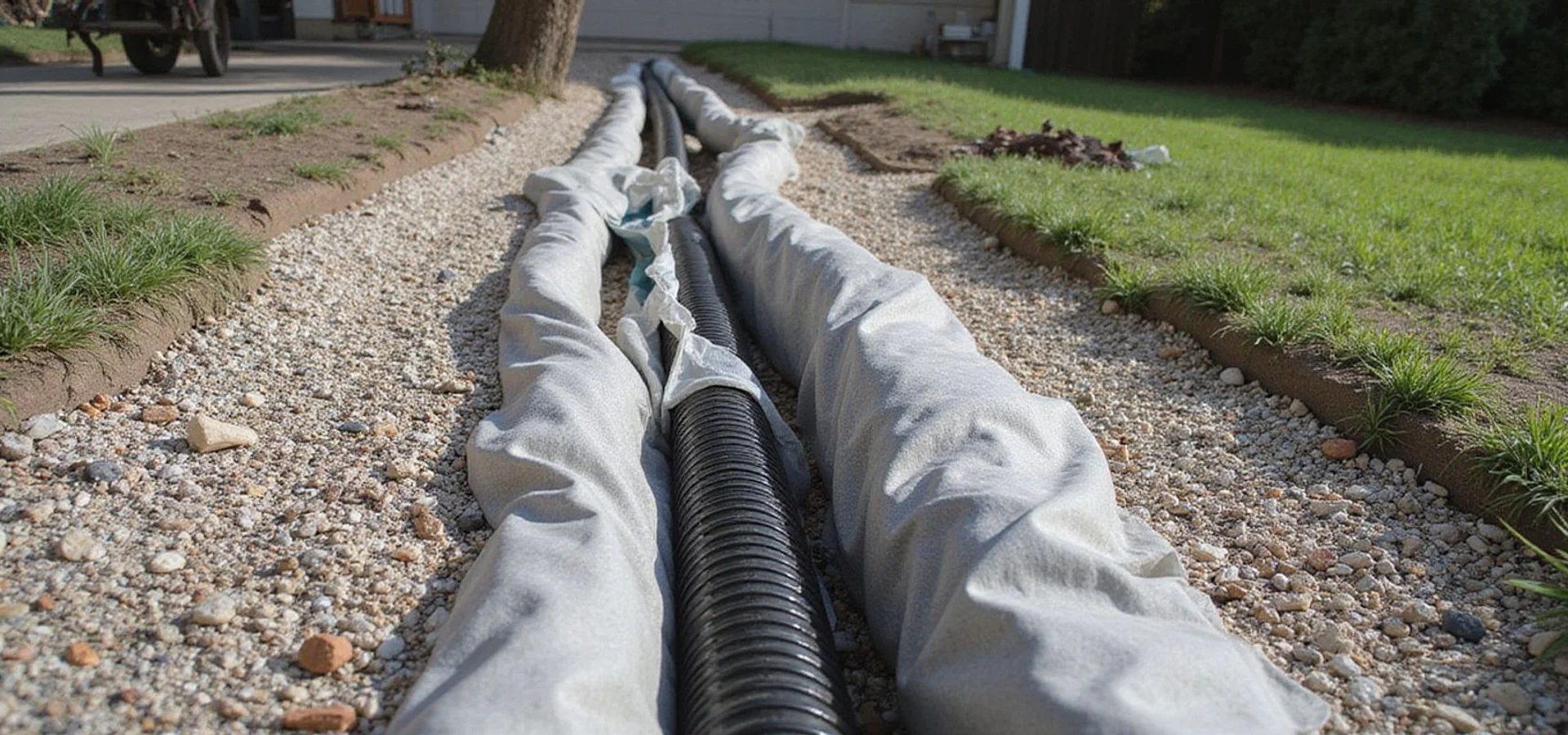
Gravel-filled French drain trench with perforated pipe running along a Houston side yard
Houston, TX & surrounding communities

Foundation Drainage Solutions for Houston Properties

French drains, grading, swales, and downspout extensions that support foundation stability — with honest limits about what drainage alone can do.

Findings explained first Written scope & exclusions Transferable warranty
4.9 (180+ reviews)
Google verified
Response Within 24 Hours
Transferable Written Warranties

Why Drainage Matters to a Foundation

Houston sits on expansive clay. Clay swells when it takes on water and shrinks when it dries out, and that volume change moves the soil supporting a foundation. When the change is uniform around a house, the whole structure moves together and nobody notices. When it is uneven, the support becomes uneven and the structure is forced to span the difference.

Water management is one of the few levers a homeowner has over that, and it is the preventive half of foundation repair in Houston. A property where roof water discharges at the slab edge on one side, where grade falls toward the house in the back, and where one elevation stays saturated while another bakes dry is a property with built-in moisture differential.

Drainage work aims at consistency. Not dryness — consistency.

What We Provide

Where we provide drainage work, it covers:

  • French drains — perforated collection pipe bedded in washed aggregate with filter fabric, carrying subsurface water to an outlet
  • Surface collection — catch basins set flush at low points, tied into solid outlet piping
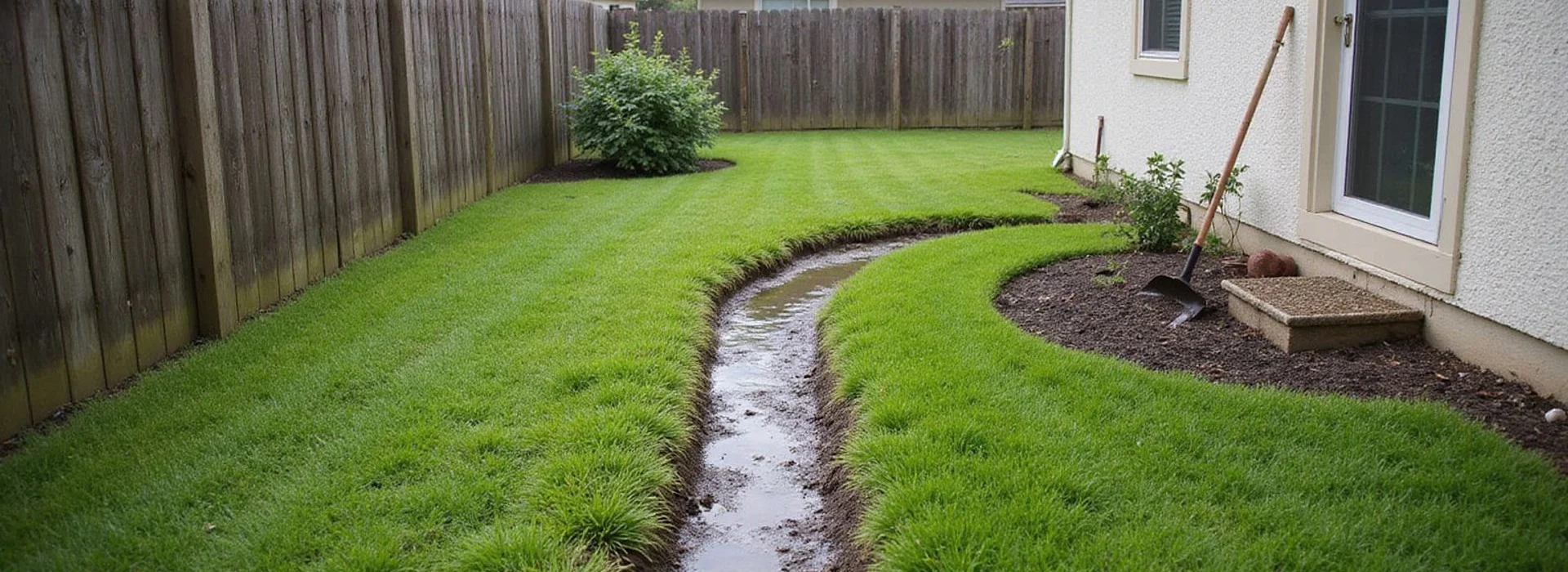
  • Swales — shaped depressions guiding surface water along an intended path
  • Regrading — restoring fall away from the structure where grade has settled or was never right
  • Downspout and gutter extensions — moving concentrated roof discharge away from the foundation
  • Sump basins and pumps — where gravity discharge is not available

The Limit, Stated Plainly

Drainage supports foundation stability. It does not resolve structural movement.

If a foundation has already moved and lost support, correcting drainage does not restore that support. Piers do that. What drainage does is help keep soil moisture around the foundation more consistent, reducing one of the drivers of differential movement.

The practical framing: if you have both a structural problem and a drainage problem, fixing drainage alone leaves the structure unaddressed, and fixing the structure alone leaves a driver running. Often both belong in the conversation. Our evaluation report records what we observed on each side so you can decide with the full picture.

Anyone selling you a French drain as a foundation repair is overselling.

The First Design Question: Where Does the Water Go?

A drain is only as good as its outlet. This gets established before anything else.

The options are gravity discharge to a lower point on the property, connection to a storm system where one exists and connection is permitted, or a sump basin with a pump where gravity is not available.

Two constraints matter:

Capacity. An outlet that cannot handle the flow the system collects backs the system up during exactly the rain it was built for. Sizing collection without sizing discharge produces an expensive trench that floods.

Where it goes. Discharging your runoff onto a neighbouring property creates a different problem and can create a dispute. Drainage easements, shared infrastructure, and MUD-level responsibility for stormwater across much of the Houston area all come into it. Outlet location is part of the design, not an afterthought.

On a property where there is genuinely nowhere for water to go, we will say so rather than installing something that cannot work.

How a French Drain Is Built

The components are not complicated, but the details determine whether the system still works in five years.

  1. Trench excavated along the planned route with fall toward the outlet
  2. Filter fabric lining the trench, which keeps fine soil out of the aggregate
  3. Washed aggregate bedding — washed matters, because aggregate with fines in it clogs
  4. Perforated collection pipe laid in the aggregate to gather water
  5. More washed aggregate over the pipe, wrapped in the fabric
  6. Solid outlet pipe at the discharge end, so water leaves the system rather than seeping back out along the route
  7. Backfill and restoration at the surface

Skipping the fabric or using unwashed aggregate saves money on day one and produces a silted-up, non-functioning system within a few years.

What to Look For Around Your Own Property

These are observations, not diagnoses, and you can check most of them yourself:

  • Water standing against the foundation or in the yard more than a day after rain
  • Soil persistently soggy on one side of the house and dry on another
  • Downspouts discharging directly at the slab edge
  • Grade that falls toward the house rather than away
  • Erosion channels in beds or lawn showing where water runs
  • Damp soil or standing water in a crawl space
  • Moss, algae, or persistent damp on the shaded elevation

None of these tells you anything structural. What they tell you is that soil moisture around the foundation is probably uneven.

Drainage and Foundation Watering: Two Halves of One Idea

Homeowners sometimes see these as contradictory. They are not.

Foundation watering keeps soil moisture from dropping too far during Houston’s dry summers, when clay shrinks and withdraws support. Drainage keeps soil moisture from becoming excessive and uneven during wet periods.

Both aim at the same thing: keeping clay within a reasonable moisture band rather than swinging between bone-dry and saturated. A property can need both, and it is common for a house to have a saturated shaded side and a desiccated sunny side at the same time.

Our foundation watering guide covers the dry side, and our post on tapering watering as the season turns covers the handover between the two.

What Drives the Cost

  • Length of the run and number of branches
  • Trench depth, which depends on what is being collected
  • Discharge solution — gravity is cheap, a sump basin and pump is not
  • Hardscape on the route requiring removal and reinstatement
  • Planting and sod restoration
  • Regrading volume where grade correction is included
  • Permits or permissions for storm connection

Maintenance

Drainage systems are not maintenance-free and we do not pretend otherwise:

  • Outlets block with leaves and debris and need clearing periodically
  • Catch basin grates collect material and need cleaning
  • Fine material eventually works into any system over a long period, which is what fabric and washed aggregate slow down
  • Sump pumps are mechanical equipment with a service life

We explain what your specific system needs at handover.

What You Receive

An assessment recording where water arrives, pools, and discharges, and how the grade actually falls; a system design showing collection points, routes, and outlet; a written scope covering inclusions, exclusions, restoration standard, and payment terms; and the transferable written warranty covering the installed work with its limits stated.
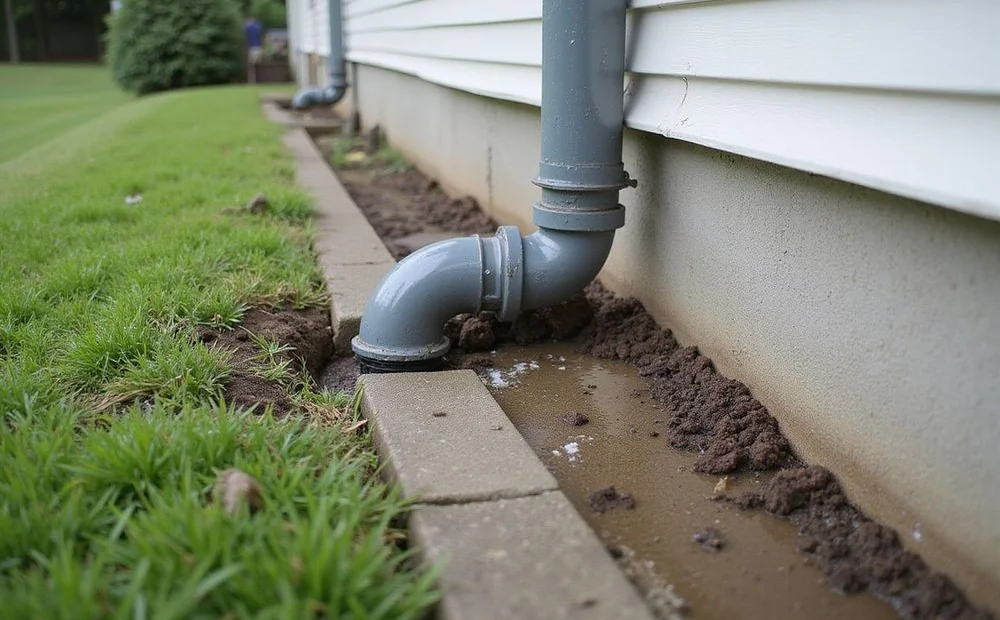
Downspout extension carrying roof water away from a slab edge

What's included in the scope

  • French drains and perforated collection systems
  • Surface grading and swales away from the slab
  • Downspout and gutter extensions
  • How water management supports foundation stability
  • Honest limits of drainage-only solutions
Cost factors

How Much Does Drainage Cost in Houston?

Drainage cost tracks the length of the run, the depth, the discharge solution, and how much hardscape or planting is in the way.

Targeted correction

Lower band

Illustrative ranges only — not a quote

  • Downspout extensions
  • Localised regrading at one elevation
  • Gravity discharge available
  • Minimal restoration
Request a scoped quote
Most common

Side-yard system

Mid band

Illustrative ranges only — not a quote

  • French drain run along one or two sides
  • Catch basins at low points
  • Solid outlet piping to discharge
  • Sod and planting restoration
Request a scoped quote

Full property system

Upper band

Illustrative ranges only — not a quote

  • Multiple runs with branch collection
  • Swale shaping across the yard
  • Sump basin where gravity discharge is unavailable
  • Hardscape removal and reinstatement
Request a scoped quote

These are illustrative ranges, not quotes. Actual cost depends on foundation type, access, excavation, engineering, permits, and restoration, and is established by a documented on-site evaluation. Read the full cost-factor guide .

Why choose us

Why Choose Houston Foundation Repair for Drainage?

The same standard applies to every service: measure first, explain the findings, then put the scope in writing.

Water path before pipe

We establish where the water comes from and where it can go before proposing a trench. A drain with nowhere to discharge is decoration.

Foundation context

We do drainage because soil moisture consistency matters to foundations, not as a separate landscaping line of business.

Honest about limits

Drainage supports a foundation. It does not resolve structural movement, and we will not sell it as if it does.

Outlet capacity considered

Sizing the collection without sizing the outlet produces a system that backs up in the rain it was built for.

Neighbouring property respected

Discharging your runoff onto the property next door creates a different problem. Outlet location is part of the design.

Maintenance explained

Drains silt up and outlets block. We tell you what upkeep the system needs rather than implying it is maintenance-free.

Process

How Does Drainage Work?

What happens, in what order, and what you receive at each stage.

STEP 01

Water path assessment

We walk the property and record where water arrives, where it pools, where it discharges, and how the grade actually falls.

STEP 02

Discharge check

A drain is only as good as its outlet. We establish whether gravity discharge is available and where it can legally go.

STEP 03

System design

Collection points, run routes, pipe sizing, and outlet are planned as a system rather than a trench in a convenient spot.

STEP 04

Installation

Trenching, filter fabric, washed aggregate, perforated collection pipe, solid outlet pipe, and basins where needed.

STEP 05

Restoration and check

Backfill, sod and planting restoration, and a check that surface fall now runs away from the structure.

Have a question about drainage?

Call the office or send the details through. We explain what it may involve before anything is scheduled.

Our work

Drainage in the Field

Illustrative images of the work types described on this page. Click any image to view it larger.

Images are illustrative of the work types described and are not presented as documented before-and-after proof of a specific customer project.

Comparison

How Houston Foundation Repair Compares

What to check Typical provider Houston Foundation Repair
Design approachTrench where the water sitsCollection, run, and outlet planned as a system
DischargeAssumedEstablished before design
Aggregate and fabricWhatever is on the truckWashed aggregate with filter fabric to resist silting
Foundation claim'This will fix your foundation'Supports stability; does not resolve structural movement
Neighbouring runoffNot consideredOutlet location planned to avoid shifting the problem
MaintenanceNot mentionedUpkeep requirements explained at handover

"Typical provider" describes a general industry baseline, not any named competitor.

Reviews

What Customers Say About Our Drainage

4.9 out of 5 across 180+ reviews
"They looked at our drainage before talking about piers. That alone told me they weren't just selling a system."
EErrol B.Old Townsite, Pearland
"Straightforward about what drainage would and wouldn't do for us. No overselling."
MMichelle O.Fairfield, Cypress
"The side yard used to hold water for days after a storm. It drains now, and they showed me the fall with a level."
RRay P.Coles Crossing, Cypress

Reviews reflect individual customer experiences. Outcomes depend on the property, the documented scope, and site conditions.

Got questions?

Drainage FAQs

Will a French drain fix my foundation?

No, and any contractor telling you it will is overselling. Drainage manages water, and water affects soil moisture, and soil moisture affects the support under a foundation. That chain is real, which is why drainage matters. But it is a supporting measure, not a structural repair. If a foundation has already moved and lost support, correcting drainage does not restore that support. Piers do that. What drainage does is help keep soil moisture around the foundation more consistent, reducing one of the drivers of differential movement. That is genuinely valuable — particularly in Houston's expansive clay, where the difference between a saturated side and a desiccated side is exactly what produces uneven support — but it is prevention and management rather than repair. The honest framing is this: if you have foundation movement and a drainage problem, correcting drainage without addressing the structure leaves the structure unaddressed. Correcting the structure without addressing drainage leaves a driver running. Often both belong in the conversation, and our evaluation report tells you what we observed on each side.

How do I know if I have a drainage problem?

The observations are usually visible and you can check most of them yourself. Water standing against the foundation or in the yard for more than a day after rain. Soil that is persistently soggy on one side of the house and dry on another. Downspouts discharging directly at the slab edge rather than carrying water away. Grade that falls toward the house rather than away from it, which you can sometimes see and sometimes need a level to confirm. Erosion channels in beds or lawn showing where water runs. A crawl space with damp soil or standing water. Water marks on the foundation or on hardscape. Mould, moss, or algae on the shaded side where things never dry out. None of these is a structural finding — they are observations about water. What they tell you is that soil moisture around the foundation is likely to be uneven, which is worth correcting regardless of whether your foundation has moved.

What is a French drain and how does it work?

A French drain is a trench containing a perforated collection pipe bedded in washed aggregate, usually wrapped in filter fabric. Water in the surrounding soil enters the aggregate, finds its way into the perforated pipe through the openings, and flows along the pipe to an outlet. The filter fabric keeps fine soil out of the aggregate, which is what stops the system silting up and becoming useless within a few years. The washed aggregate matters for the same reason — aggregate with fines in it clogs. At the discharge end, the collection pipe transitions to solid pipe, because you want water leaving the system rather than seeping back out along the route. The outlet needs somewhere to go: a lower point on the property, a storm connection where one is available and permitted, or a sump basin with a pump where gravity discharge is not possible. A French drain with no viable outlet is a trench full of gravel. Establishing the discharge is the first design question, not the last.

What is the difference between a French drain and a surface drain?

They handle different water. A French drain is subsurface: it collects water moving through the soil and water that soaks down into the trench. A surface drain — catch basins set flush in low points, connected to solid pipe — collects water running across the surface before it soaks in. Many properties benefit from both, and they are often installed as a combined system: catch basins at the low points where water collects, tied into a run that carries it away. Swales are a third element, shaped depressions across a yard that guide surface water along an intended path rather than letting it find its own. Which combination suits a property depends on where the water is arriving from, whether the problem is surface runoff or saturated soil, and what the site allows.

Where does the water actually go?

This is the first question in any drainage design and it constrains everything else. The options are gravity discharge to a lower point on the property, connection to a storm system where one exists and connection is permitted, or a sump basin with a pump where gravity is not available. Two constraints matter. First, capacity: an outlet that cannot handle the flow the system collects backs the system up in exactly the rain it was built for. Second, where it goes: discharging your runoff onto a neighbouring property creates a different problem and can create a dispute. Drainage easements, shared infrastructure, and in much of the Houston area MUD-level responsibility for stormwater all come into it. On a property where there is genuinely nowhere for water to go, we will say so rather than installing a system that cannot work.

Should I water my foundation instead of installing drainage?

They address opposite conditions and both belong in the picture. Foundation watering keeps soil moisture from dropping too far during dry periods, which matters in Houston summers when clay shrinks and withdraws support. Drainage keeps soil moisture from becoming excessive and uneven during wet periods. The goal in both cases is the same: consistency. Clay that stays within a reasonable moisture band moves less than clay that swings between bone-dry and saturated. A property can need both, and it is not unusual for a house to have a saturated shaded side and a desiccated sunny side simultaneously. Our foundation watering guide covers the summer side, and this service covers the wet side.

Do downspout extensions actually help?

Meaningfully, yes, and they are the cheapest drainage intervention available. A roof collects a significant volume of water and concentrates it at a handful of discharge points. A downspout emptying at the slab edge puts that entire volume directly into the soil immediately against the foundation, repeatedly, every time it rains. Extending the discharge away from the structure moves that concentrated volume to somewhere it does less harm. It is simple, inexpensive, and often the single most effective thing a homeowner can do about foundation moisture. Where extensions alone are enough, we will say so rather than proposing a trench.

How much slope should the grade have away from my foundation?

The principle is that the ground should fall away from the structure so water runs off rather than pooling against it, with the fall maintained for a reasonable distance before the grade flattens out. Specific figures depend on the site and on what is achievable — fences, neighbouring grade, hardscape, and existing levels all constrain what can be done. What matters practically is that water visibly runs away rather than toward the house, and that no pocket holds water against the slab. We check the actual fall during the assessment rather than assuming it from appearance, because a grade that looks flat often is not.

Does drainage work require a permit?

It depends on scope, on where the discharge goes, and on the jurisdiction. Connection to a storm system generally requires permission and sometimes a permit. Work affecting a drainage easement is a separate matter. In much of the Houston area, particularly unincorporated Harris County, stormwater infrastructure is handled at MUD or subdivision level rather than by a city public works department, which changes who you talk to. We confirm what applies to your address before scheduling.

How long does a drainage system last, and what maintenance does it need?

A properly installed system with washed aggregate and filter fabric lasts many years, but it is not maintenance-free and anyone claiming otherwise is misleading you. Outlets block with leaves and debris and need clearing periodically. Catch basin grates collect material and need cleaning. Over a long period, fine material does eventually work into a system and can reduce its capacity, which is why fabric and washed aggregate matter at installation. Where a sump pump is part of the system, that is mechanical equipment with a service life. We explain the maintenance the specific system needs at handover.

Can a root barrier help if a tree is drawing moisture from my foundation?

It can be part of the answer, though it is a separate intervention from drainage and addresses a different mechanism. A large tree close to a foundation withdraws soil moisture through its root system, and in Houston's expansive clay that withdrawal can desiccate and shrink the soil on that side of the house while the rest stays comparatively moist, producing exactly the kind of differential that leads to distress. A root barrier is a vertical panel installed in the ground between the tree and the foundation to redirect root growth away from that zone, which can reduce localised moisture withdrawal over time. It does not remove an existing moisture deficit and it will not undo movement that has already happened. Where tree proximity is a factor we record it during the evaluation, and a root barrier is one option alongside drainage correction and consistent foundation watering. Removing a mature tree is a bigger decision with its own tradeoffs, and we will not recommend it lightly.

Can drainage work be done alongside foundation repair?

Yes, and there is usually a sensible sequence. Where excavation for pier installation is happening along the perimeter anyway, some drainage work can be coordinated with it efficiently. Where drainage is the apparent driver of movement, addressing it alongside the structural work means the cause is being handled rather than left running. Our evaluation records both the structural findings and the site water conditions, and the proposal states what each scope covers.

My neighbour's yard drains into mine. What can be done?

This comes up regularly and it has both a technical and a non-technical side. Technically, a property can be designed to collect and route water arriving from an adjacent property to an outlet, which manages the effect. Non-technically, runoff between properties, drainage easements, and shared infrastructure can involve the other owner, the subdivision, or the MUD. We can describe what we observe and what a system on your property would do about it. We are not the right party to resolve a boundary matter, and we will point you toward the right authority rather than pretending otherwise.

Still have a question?

Tell us what you're noticing and we'll explain what it may involve before anything is scheduled.

Request a Foundation Repair Quote
We respond within 24 hours

Ready to Discuss Drainage for Your Property?

Send the details and we'll explain what drainage solutions would involve at your address, findings first, then scope.

Findings explained before any quote Written scope with stated exclusions Transferable written warranties
Call Request a Quote