What Concrete Leveling Covers
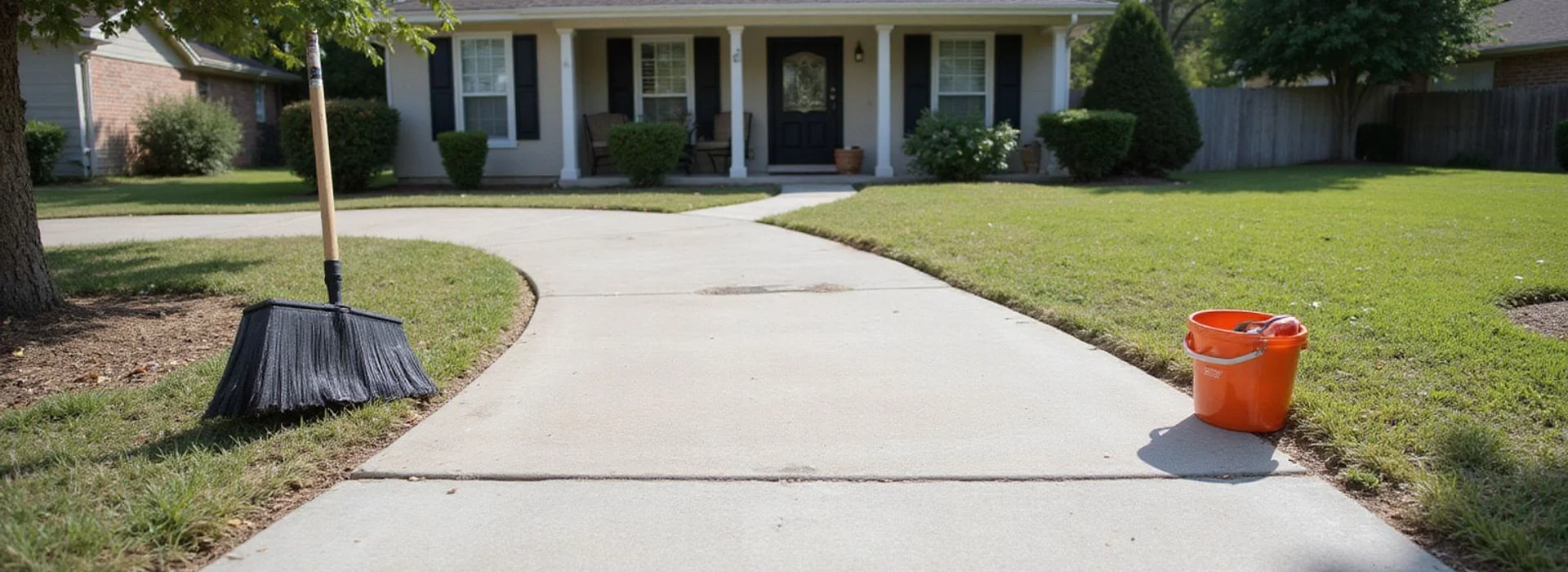
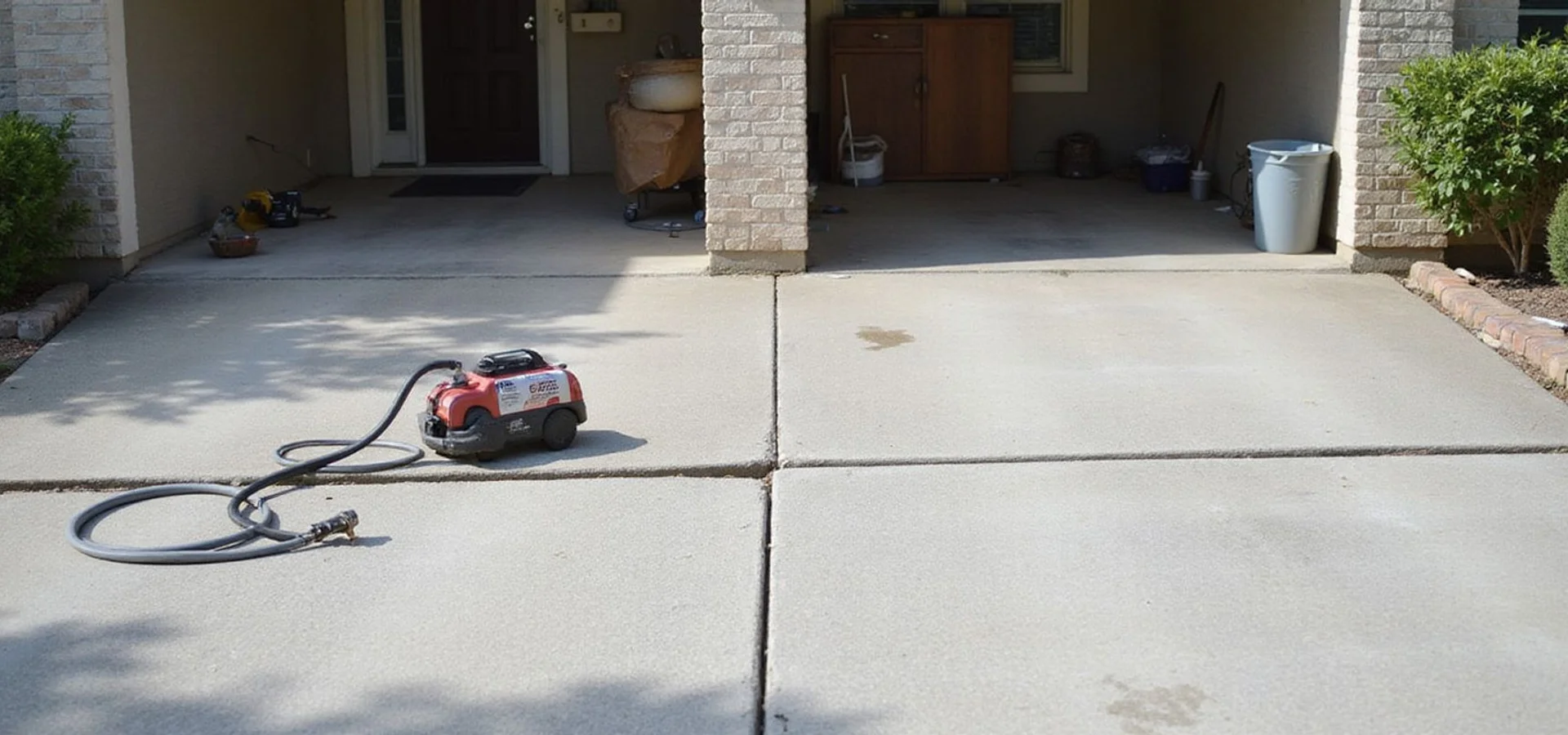
Concrete leveling raises settled flatwork back to grade by filling the void beneath it, rather than breaking the slab out and pouring a new one. It applies to supported concrete surfaces around a property: driveways and driveway approaches, patios, sidewalks and walkways, pool decks, garage floors, porch slabs, and steps.
The point that matters most: this is flatwork, not your foundation. A sunken patio and a settling house foundation are separate problems requiring separate assessments, and we keep them separate from our structural foundation repair in Houston. Blurring the two is how a $1,200 driveway job becomes a five-figure proposal.
Which Slabs Can Be Lifted
Suitability turns on two questions, and both get checked before we recommend anything.
Is the slab sound enough to move as a unit? Lifting works by raising the slab, which means it has to hold together while it goes up. A panel with a clean settlement and tight cracking is a good candidate. A panel broken into several pieces, with crumbling or spalling concrete, exposed corroded reinforcement, or general structural deterioration, is not. Lifting it breaks it up further. Thin, unreinforced slabs poured decades ago sometimes fall into the same category.
Has the cause stopped? A void created by active erosion will re-form after it is filled if the water path is still running. Common drivers are subgrade erosion from water travelling under the slab, poorly compacted original fill still consolidating, expansive clay shrinking and leaving the slab spanning a gap, and irrigation or plumbing leaks washing out material. Downspouts discharging at a driveway edge are a very common contributor.
Where replacement is the honest answer, we say so. Our can uneven concrete be leveled guide covers the suitability question in more detail.
The Two Methods
Polyurethane foam jacking
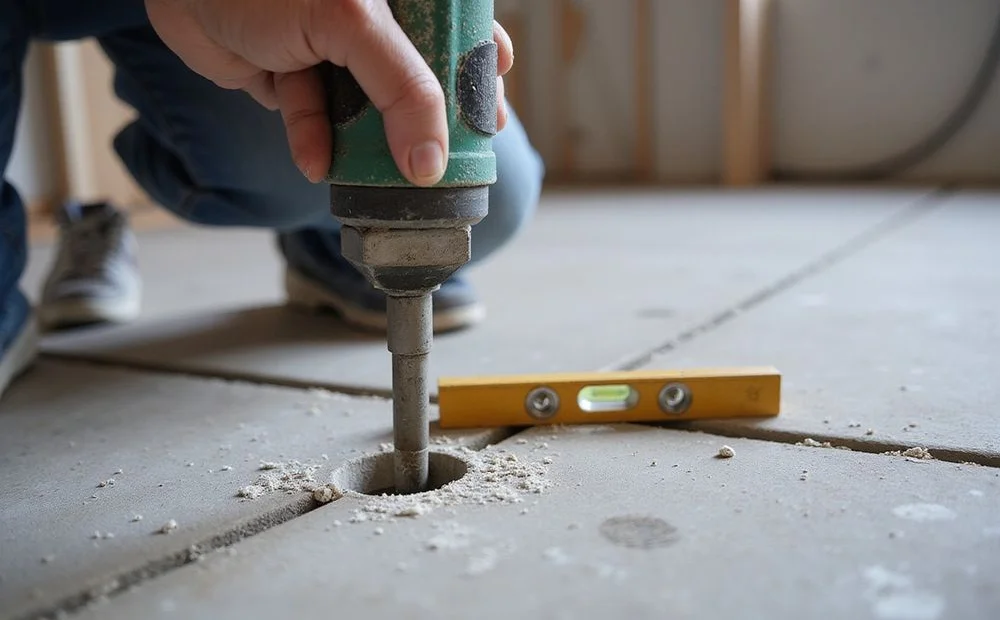
A two-part expanding polymer is injected through small ports drilled through the slab. The foam expands in place, fills the void — including narrow voids a slurry would struggle to reach — and raises the slab.
- Cures within minutes; most surfaces return to service the same day
- Lightweight, which matters where the subgrade has already proven it cannot carry load
- Small injection ports mean minimal patching
- Higher material cost per unit volume
Mudjacking
A cementitious slurry is pumped through larger drilled holes. The slurry fills the void and its volume raises the slab.
- Well-established method with lower material cost
- Denser, heavier fill, which suits some subgrade conditions
- Longer cure, so the return-to-service window extends
- Larger, more visible patch holes
Neither is universally better. Void geometry, subgrade condition, required lift, slab condition, access, and how quickly you need the surface back all point toward one or the other. Our foam versus mudjacking comparison sets out the tradeoffs.
How the Work Runs
Small ports are drilled through the slab in a pattern suited to the void and the lift required. Material is injected in controlled stages while the lift is monitored with a level across the joint, so the slab comes up evenly rather than tilting. Once the target is reached, injection stops, ports are patched, and joints are sealed where appropriate.
Most residential jobs are completed in a single visit. Large areas — a full driveway, a substantial pool deck — sometimes stage across more than one.
Drainage Slope: The Detail That Gets Missed
Flatwork was poured with a fall, and that fall usually carries water away from the house. Lifting a slab back to “level” in the literal sense can destroy that fall and start directing water at your foundation instead.
We check the intended fall before lifting and confirm it afterward. On a patio or walk sitting against the foundation, restoring proper fall away from the structure is often the main benefit of the job, not a side effect.
Where drainage is the underlying driver, drainage work may belong in the conversation alongside the lift.
What Drives the Cost
- Area lifted and the number of panels or sections
- Void volume beneath the slab, which determines material quantity
- Amount of lift required
- Method chosen, foam or slurry
- Access for equipment and hoses
- Joint sealing and patching scope
- Any drainage correction included alongside
Leveling is usually substantially less than demolition and replacement where the slab is suitable, because it skips demolition, haul-off, disposal, forming, pouring, and cure time. That comparison only holds where lifting is appropriate in the first place.
Honest Limits
- Leveling does not repair the concrete. A cracked slab that is lifted is a level cracked slab.
- It does not fix a cause that is still active. If water is still running under the slab, it will settle again.
- It does not restore a decorative finish. Patches on stamped or coloured concrete will not match exactly.
- It has nothing to do with your house foundation. If flatwork settlement is a symptom of foundation movement rather than independent settlement, that requires a foundation evaluation instead.
- We do not describe the result as permanent.
What You Receive
An assessment noting slab suitability and the apparent cause of settlement, a written scope covering method, area, inclusions, exclusions, and expected return-to-service timing, and the transferable written warranty with its coverage and limits stated.