
What a Hydrostatic Test Is
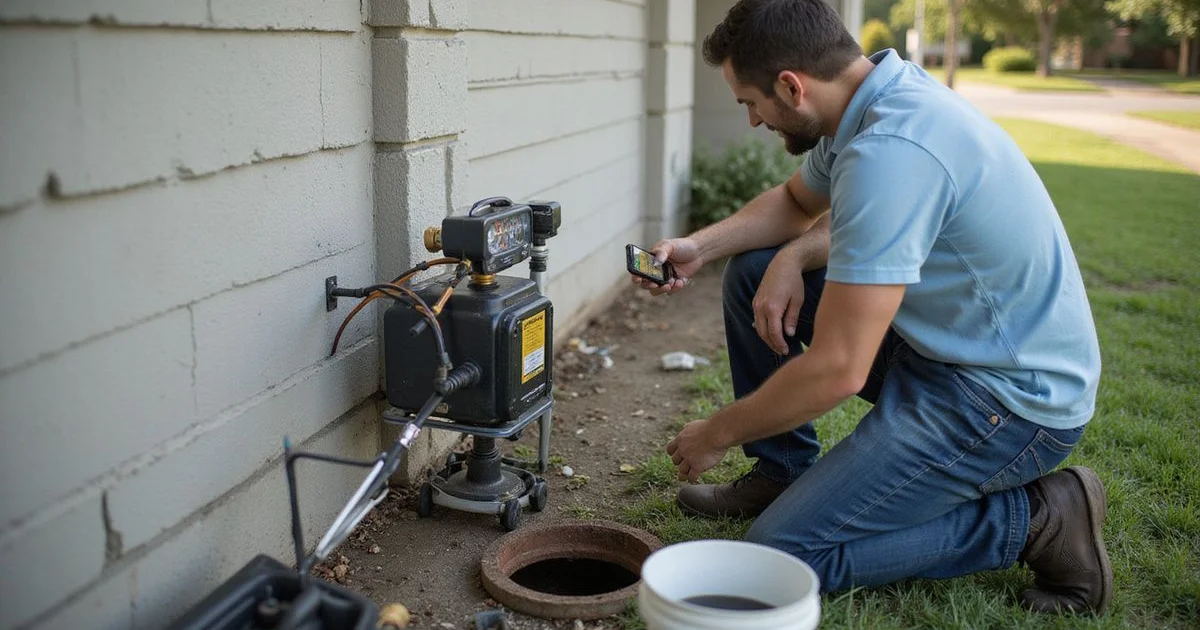
A hydrostatic test checks whether the drainage system beneath a slab holds water.
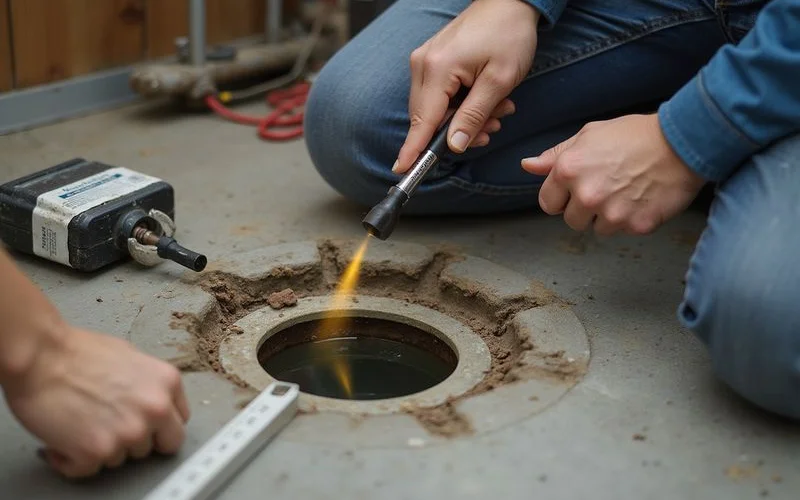
In practical terms, the system is isolated — typically by plugging at an access point — and filled with water to a set level at a cleanout. The level is then monitored over a period. If it holds, the system is holding. If it drops, water is escaping somewhere, which indicates a failure in the under-slab drainage.
It is a pass-or-fail check on the integrity of the system as a whole. It does not tell you where the failure is. Locating that requires separate leak detection work.
Why It Comes Up After a Slab Lift
When a slab is lifted, the structure moves — and the drain lines running beneath it move with it.
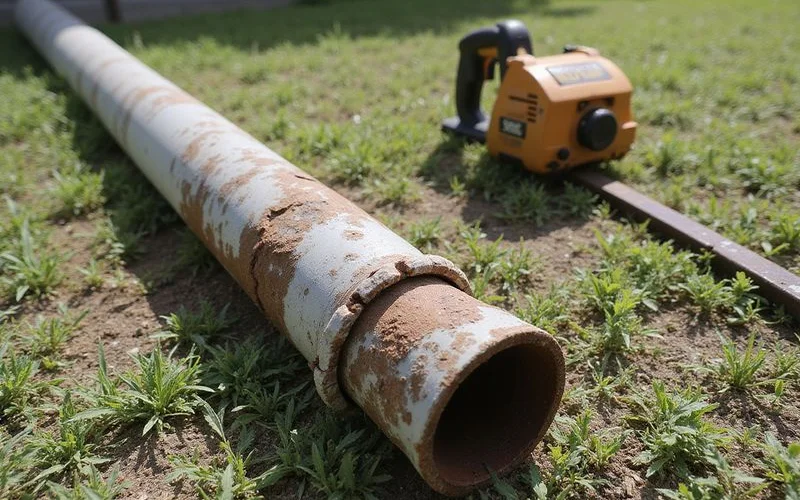
This matters most for aged cast iron, which was standard in Houston residential construction for decades. Cast iron corrodes over time, losing wall thickness and becoming brittle. A section that has been sitting undisturbed for forty years and holding perfectly well may not tolerate being moved.
PVC is more forgiving but not immune, particularly at joints and at penetrations through the slab.
The honest framing: lifting does not create a plumbing problem out of nothing. It can reveal, or finish off, a line that was already deteriorated. That distinction matters for the conversation about responsibility, which is exactly why it belongs in the written scope in advance.
This is discussed in the context of the full project on our slab foundation repair page.
When It Is Required
Requirements depend on scope and jurisdiction. Post-lift plumbing testing may be required before sign-off in certain circumstances, and the jurisdictions across our service area handle it differently — City of Houston, unincorporated Harris County, Fort Bend, Montgomery, Brazoria, and the various municipalities each have their own approach.
Beyond regulatory requirement, testing is often sensible regardless:
- Where the house has original cast iron drainage
- Where the lift was substantial
- Where there was any pre-existing suspicion of a plumbing problem
- Where a buyer, seller, or lender wants documented confirmation
- Where the homeowner simply wants to know
Our permits guide covers how requirements vary across the region.
Who Performs It
A licensed plumber. Hydrostatic testing is plumbing work, performed under a plumbing permit where one applies, with its own inspection.
That has a practical consequence: the foundation contractor and the plumber are two parties, and the scope needs to say which one is arranging the test, when it happens in the sequence, and who is responsible for scheduling any inspection.
Where we coordinate it, that is stated. Where you are engaging a plumber directly, the proposal says so and identifies the handover point.
The Questions to Settle Before Work Begins
Put all of these in writing rather than trusting a conversation:
- Is a test required for this scope and this jurisdiction?
- Is it included in the proposal price, or billed separately?
- Who arranges it — the foundation contractor or you?
- When does it happen in the project sequence?
- What happens if it fails — who investigates, and at whose cost?
- Is a pre-lift test worth performing as a baseline?
That last one deserves thought. A test before the lift establishes whether the system was holding beforehand. Without it, a failed post-lift test leaves an unresolved question about whether the line was already gone. A pre-lift test costs money and removes an argument. Whether it is worth it depends on the age of the plumbing and the size of the lift.
What Happens If It Fails
A failed test means water is escaping from the under-slab drainage somewhere. The next steps are a plumbing scope rather than a foundation one:
Locate the failure. Leak detection work identifies where. Camera inspection, isolating sections, and other methods narrow it down.
Decide on access. Reaching a failed line under a slab means either tunneling from outside or breaking through the floor inside. That choice has its own tradeoffs.
Repair and retest. The line is repaired or replaced and the system tested again.
Cost and responsibility. This is where the pre-lift baseline earns its keep, and where the written scope agreed in advance determines who bears what.
The Related Question: Is the Leak the Cause?
Sometimes the sequence runs the other way round. A homeowner has a wet floor or a warm spot, suspects a foundation problem, and the underlying issue turns out to be an under-slab leak that has been saturating soil in one zone for months.
In that situation, repairing the structure while a line continues leaking underneath is working in the wrong order. Our guides on slab leaks versus foundation problems and slab leak testing versus foundation evaluation cover how to think about sequencing.
The Short Version
A hydrostatic test is a reasonable, standard part of many slab repair projects in Houston. It is not always required, it is not always included, and it is not something to discover after the jacks have come out.
Ask about it while you are still comparing proposals. Our comparison worksheet includes it as one of the items every proposal should address.