
The Observation
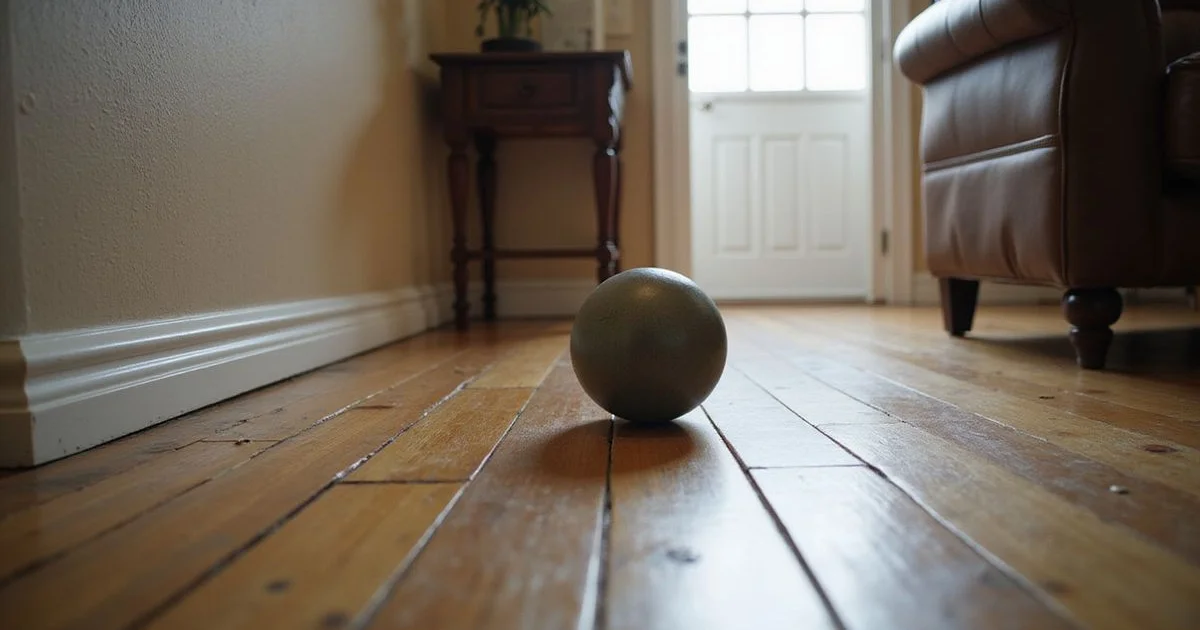
You notice it walking across a room. A ball rolls on its own. Furniture sits slightly out of true against a wall. A rug creeps toward one side.
Floor slope is one of the more reliable homeowner observations, because unlike a crack, it is difficult to misattribute to cosmetic causes. Something is genuinely out of plane.
What it does not tell you is why, or whether it is changing — and those are the two questions that matter. Our warning signs hub covers the wider set of observations.
What Causes an Uneven Floor
Foundation movement. Support beneath the structure has changed unevenly, and the floor plane has followed.
Original construction. This matters more than people expect, particularly in Houston. Older homes built on hand-set piers were frequently not level when new, and slabs poured decades ago were not always finished to modern tolerances. Some floors have sloped since the day they were built.
Framing issues on a raised foundation. A girder deflecting between supports, a joist that has lost capacity, a pier that has settled. Covered in the pier-and-beam signs guide.
Subfloor or finish issues. A localised dip from water damage, a failed subfloor section, or an uneven underlayment. Local rather than structural.
Previous work. A house re-leveled before, or an addition built to a different level than the original structure.
Slope Versus Bounce
Two different things that get conflated.
Slope is the floor plane sitting out of level. It is about position.
Bounce is the floor deflecting under load as you walk. It is about stiffness — usually joist span, joist condition, or a lost bearing point on a raised foundation.
A floor can be sloped and rigid, or level and bouncy, or both. They have different causes and different responses, so noting which you have is worth doing.
What You Can Check Yourself
The ball test. Place a ball or a marble on the floor and watch. It tells you there is a slope and roughly which way it falls. Crude, but genuinely informative, and free.
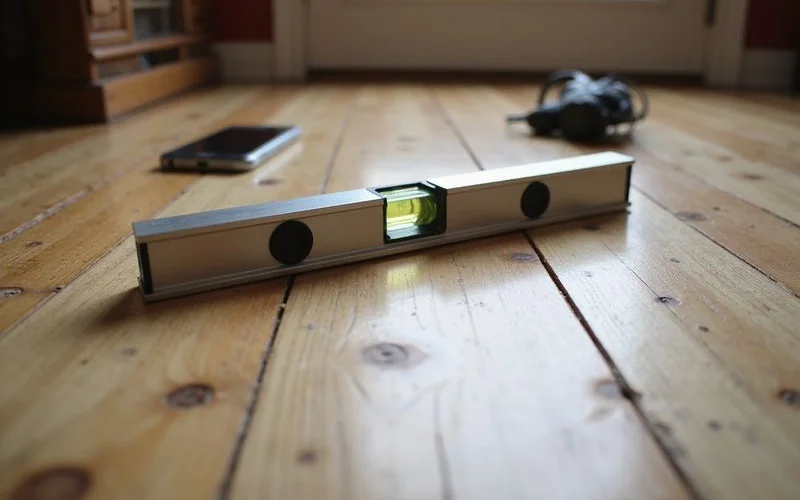
A long spirit level. Confirms slope over its own length. A four-foot level tells you about four feet of floor.
Walking it. You can often feel a slope you cannot see, particularly across a doorway.
Do all three, note what you find, and mark it on a rough floor plan.
Why a Survey Beats a Level
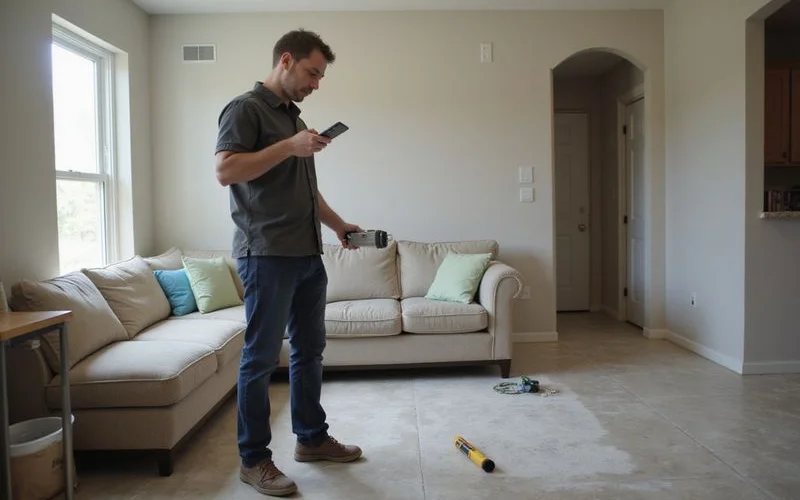
A spirit level tells you about the four feet it is sitting on. A relative elevation survey measures floor height at points across the whole accessible floor area against a benchmark datum, producing a picture of the entire plane.
That picture is what carries the information:
- Where the high and low points are
- How the transition happens — a gentle tilt, a sharp step, a bowl, a ridge
- Whether it is one direction or several
A single low corner with distress radiating from it reads as settlement. A high centre with perimeter distress reads as heave. Those are different mechanisms requiring different responses, and no spirit level distinguishes them.
The evaluation walkthrough covers how the survey is performed.
Why There Is No Magic Number
You will find figures quoted — a certain amount of fall over a certain distance being the threshold for concern. Treat them carefully.
The same amount of slope means different things depending on the age and construction of the house, whether it was level originally, whether it is changing, and whether it corresponds with other distress. A 1925 bungalow that has sloped for a century is not in the same situation as a 2015 slab home that has developed the same slope in three years.
Change matters more than magnitude. Which is why the baseline is the useful output of a first survey, even when the conclusion is that nothing needs doing.
What to Document
- Where the floor slopes, marked on a rough plan, with the direction of fall
- Where it is bouncy, if it is
- When you first noticed, and whether it has changed
- Gaps at baseboards on the affected side, photographed with scale and date
- Which doors and windows have changed
- Whether the house has ever been leveled before
When to Have It Measured
- A slope you can feel that was not there before
- Slope accompanied by cracking or binding doors on the same side
- Bounce that has noticeably increased
- Buying or selling the property
- You have a repair history and want to know whether it has moved since
A foundation evaluation gives you figures, a pattern, and a documented baseline. On a house that may never have been level, that baseline turns the real question — has it changed? — into something you can actually answer next year.