A short operational update, published because it changes what homeowners can expect from us at a specific point in a project: the paperwork.
We now coordinate permitted foundation work across Harris, Fort Bend, and Montgomery Counties, and we manage the permitting and inspection sequence for the scopes we perform in each. That coverage applies across every scope of foundation repair in Houston that we take on. This post explains what that means practically, and why the three-county thing is more complicated than it sounds.
Why Three Counties Is Not a Simple Statement
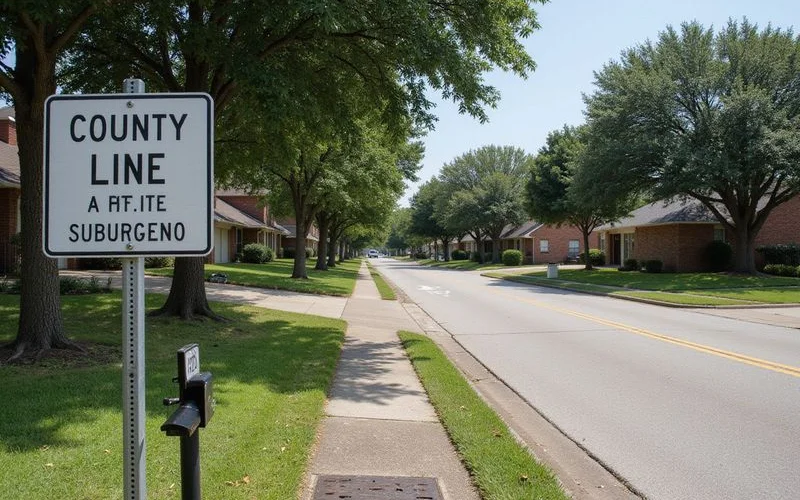
The greater Houston area is not one permitting authority. It is a city, several counties with substantial unincorporated territory, and a long list of separate municipalities — and subdivisions routinely straddle the boundaries between them.
Some examples from our own service area:
- Katy spans City of Katy, Harris County, Fort Bend County, and Waller County
- Spring spans Harris County and Montgomery County
- Pearland spans Brazoria County and Harris County, with its own city process
- Stafford spans Fort Bend and Harris Counties
- Friendswood spans Galveston and Harris Counties
- Cypress is largely unincorporated Harris County, which behaves differently from an incorporated city
Two houses on the same street can fall under different authorities with different requirements.
What We Do Before Scheduling
Jurisdiction is now established at the evaluation stage, not after a proposal is accepted. Specifically:
- We confirm the governing authority for the address before anything is scheduled.
- We identify what the scope requires — foundation permit, plumbing permit, or both.
- We state it in the written proposal, including who pulls each permit and whether the fee is included in the price or billed separately.
- We build the inspection schedule into the timeline rather than treating it as a variable to discover later.
That last point is the one homeowners notice most. Inspections happen when an inspector is available, not when a crew is ready, and a project timeline that ignores that is optimistic rather than realistic. We would rather quote a timeline that holds.
Our permits guide covers the general picture of when permits apply.
Post-Lift Hydrostatic Testing
The second half of this update concerns plumbing, and it is the part that most often catches people out at sign-off.
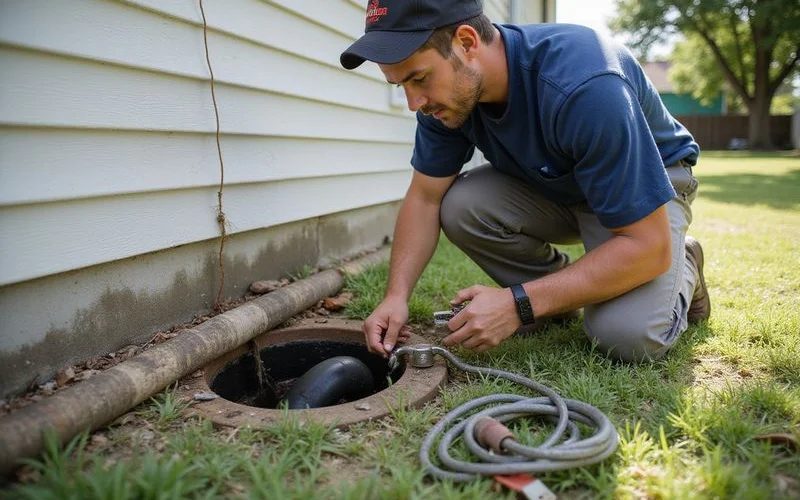
Lifting a slab moves the structure, and the under-slab drain lines move with it. Aged cast iron — standard in Houston residential construction for decades — corrodes over time and becomes brittle. A line that has been holding perfectly well for forty years may not tolerate being moved.
A hydrostatic test checks whether the under-slab drainage holds water at a set level. It is a pass-or-fail on system integrity, and in some circumstances it is required before sign-off.
What we now state in every relevant proposal
- Whether a test applies to this scope in this jurisdiction
- Whether it is included in the price or billed separately
- Who arranges it — us, or you engaging a plumber directly
- When it happens in the project sequence
- What happens if it fails, and who investigates at whose cost
- Whether a pre-lift baseline test is worth performing
That last item deserves a note. A test before the lift establishes whether the system was holding beforehand. Without one, a failed post-lift test leaves an unresolved question about whether the line was already gone. A pre-lift test costs money and removes an argument, and whether it is worth it depends on the age of the plumbing and the size of the lift. We now raise it as a decision rather than leaving it unmentioned.
The hydrostatic testing guide covers what the test establishes and what it does not.
Why Permitting Is Worth Doing Properly
It is easy to see permitting as cost and delay. Two reasons it matters later:
Resale and refinancing. A buyer, an inspector, or a lender asking about a documented repair history wants records. Permitted work with inspection records is a clean answer. Unpermitted structural work is a question you have to explain, often at an awkward moment.
Disputes and claims. Where something goes wrong later — with the work, with an insurer, or between parties — a permitted, inspected job with a paper trail sits in a fundamentally different position from one without.
The cost of doing it properly is modest at the time. The cost of not having done it appears years later.
What Has Not Changed
The process before the permit is unchanged, and it is still the part that matters most.
We evaluate first: a relative elevation survey against a benchmark, distress mapping inside and out, and a record of site conditions. You receive documented findings. If the readings do not support repair, the report says to monitor and re-measure, and you keep the baseline.
Nothing about coordinating permits across three counties changes that order. Findings first, then scope, then paperwork.
Coverage
Foundation work permitted and coordinated across Harris, Fort Bend, and Montgomery Counties, with projects also performed across Brazoria, Galveston, Waller, and Chambers County jurisdictions as scopes require. The full list is on our service areas page.
If you are unsure which authority governs your address, ask us. It is the first thing we establish anyway.
Planning foundation work and want the permitting handled? — Request a foundation repair quote