Houston’s summer is starting to let go. Overnight lows are easing, the afternoon storms are becoming less reliably absent, and within a few weeks the wet season will properly arrive. Seasonal soil moisture is the single biggest variable behind foundation repair in Houston, which is why the transition months are worth paying attention to.
This is the moment where a lot of homeowners make the same avoidable mistake: they turn the foundation watering off.
Why Turning It Off Abruptly Is the Wrong Move
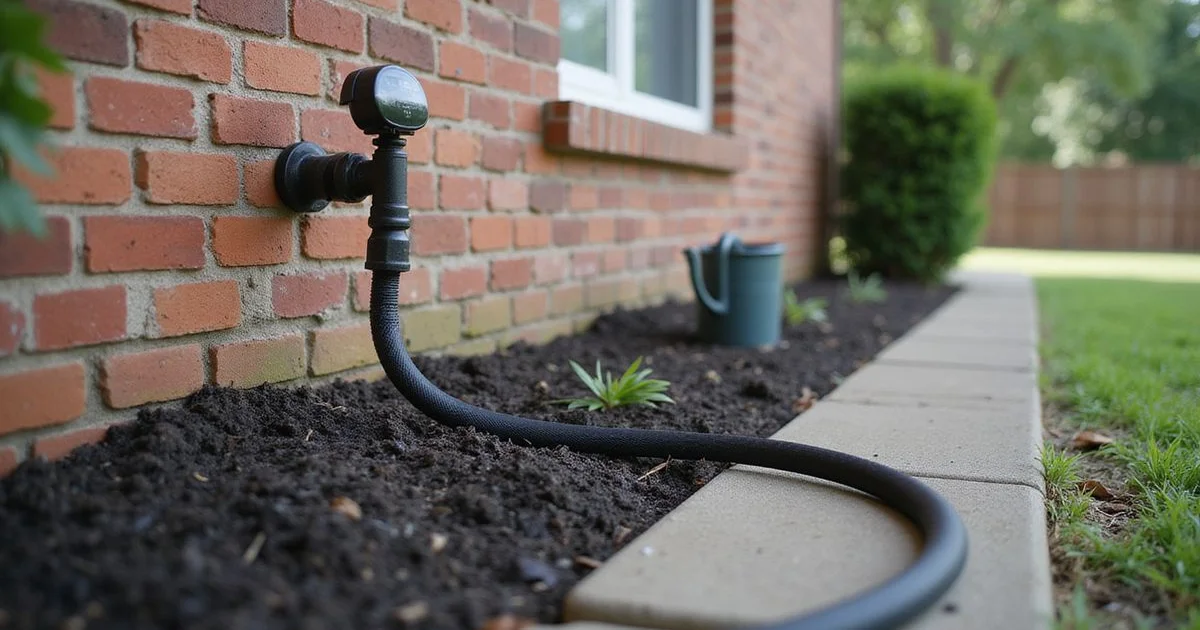
The whole point of watering a foundation is consistency. Not wetness — consistency.
Expansive clay swells when it takes on water and shrinks when it dries. Sharp swings between the two are what move soil, and uneven swings around a house are what produce uneven support — the mechanism behind most of the slab foundation repair work we scope in this area. Our guide on why Houston clay soils move foundations covers the mechanics.
So consider what happens when you stop a daily watering routine on the same week the first sustained rainfall arrives. Soil that has been held at a steady moisture level all summer goes from managed to soaked, quickly. That is exactly the kind of swing the routine existed to prevent, delivered at the end of the season instead of during it.
Taper instead. Reduce frequency over a few weeks as rainfall becomes reliable, rather than switching off in one step.
What to Do Over the Next Few Weeks
Keep checking the soil rather than the calendar. Push a screwdriver or a probe into the watered band in two or three places around the house. Easy entry means reasonable moisture. Won’t go in means still dry. Mud on the way out means you have overdone it.
Check more than one elevation. This is the part people skip, and it is the part that matters most. The south and west sides of a Houston house dry faster than a shaded north side all summer long. At this point in the season the gap between them can be substantial. If one side probes easily and the other is still like concrete, keep watering the dry side while easing off the wet one.
Reduce frequency before you reduce duration. Going from daily to every other day, then to twice a week, keeps the soil in a band rather than dropping it off a cliff.
Watch what the rain actually does. A brief afternoon storm that runs straight off baked ground has done far less than the rain gauge suggests. Soil that has been dry for months does not absorb quickly.
Stop entirely only once rainfall is genuinely reliable and the soil is holding moisture on its own.
Now Is a Good Time to Look at Drainage
There is a practical reason to do this in the transition rather than in October: the wet season is about to test whatever you have.
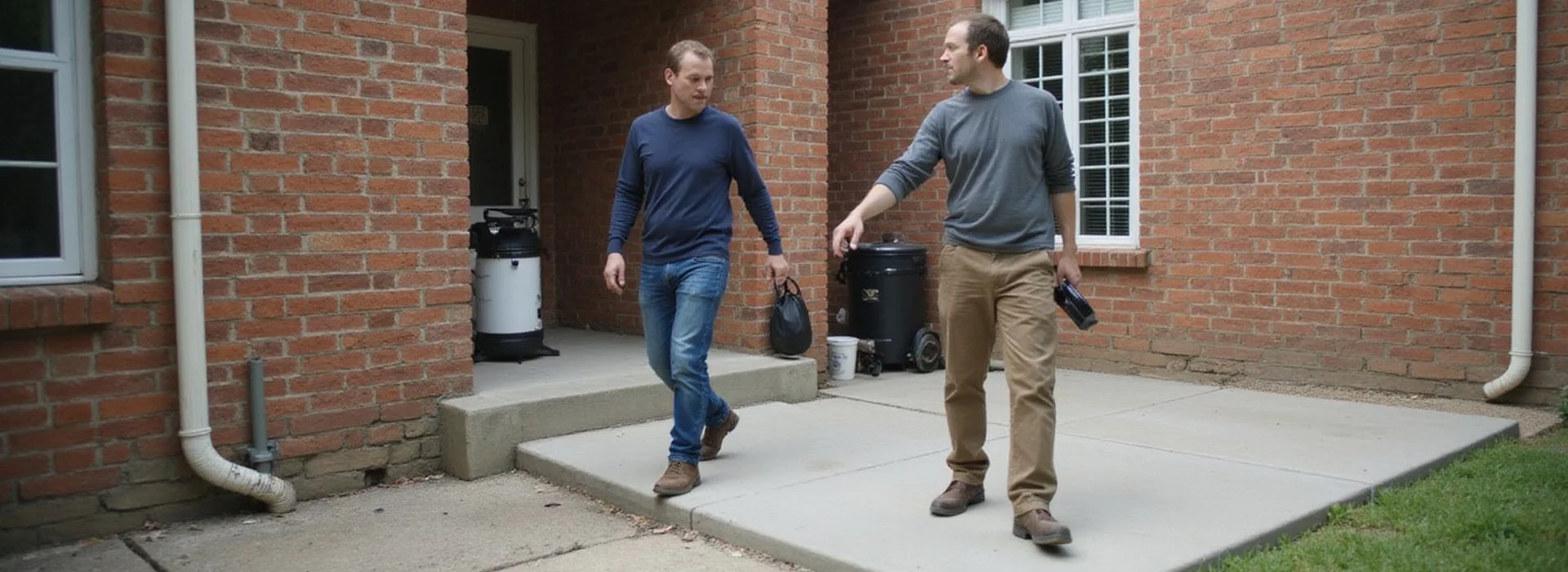
Walk the perimeter and check:
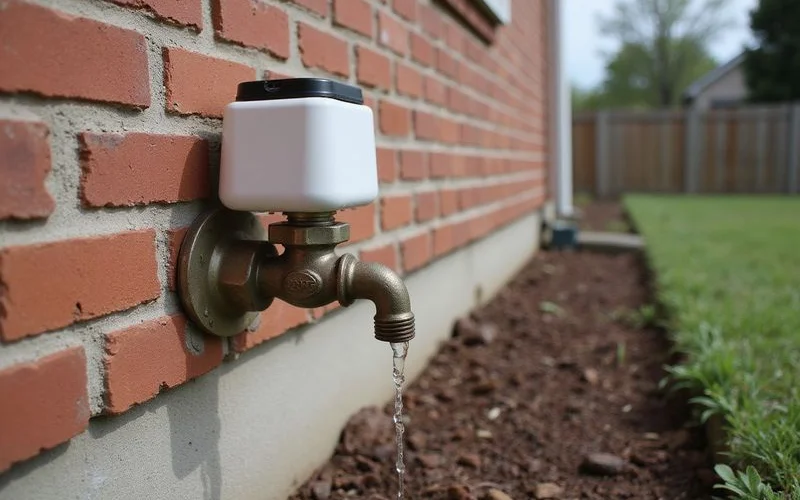
- Where each downspout discharges. At the slab edge, or away from it? This is the cheapest and most effective correction available, and a surprising number of Houston houses have at least one downspout emptying directly at the foundation.
- Whether grade falls away from the house. Beds get topped up and mulch accumulates until the fall reverses without anyone noticing.
- Whether gutters and drain grates are clear. Leaves accumulate through the dry months and block things precisely when you need them working.
- Whether any drain outlet is obstructed. A French drain with a blocked outlet is a trench full of gravel.
- Where water pooled last wet season. If you remember it, note it now while you can still do something before it happens again.
Our drainage solutions page covers the corrective work, and the French drains guide explains the components.
The Transition Is Also When Distress Shows Up
Expect to notice things over the next couple of months, and expect most of them to be unremarkable.
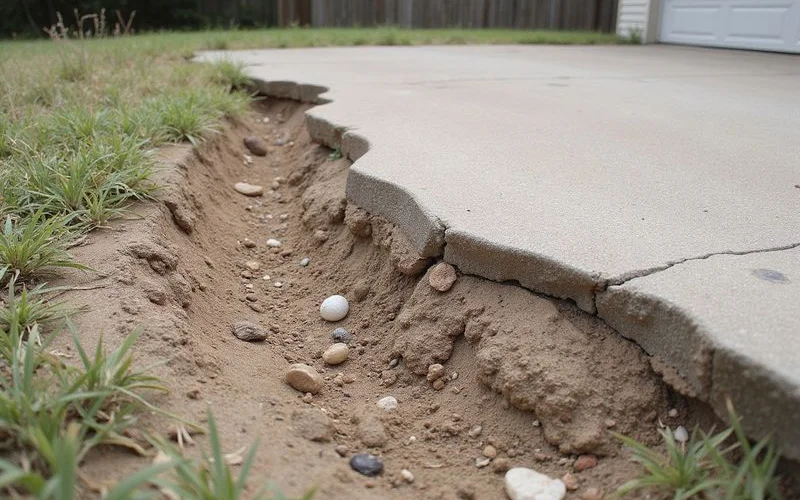
Late summer is when soil is at its driest and shrinkage is at its most pronounced. Cracks that have opened through the dry stretch are at their widest now. Doors that have been binding may start operating again as the framing responds to returning humidity — or may bind differently.
Two responses, in order:
Document it. Dated photographs with something for scale, from a consistent position. A written note of which doors are doing what. Mark the end of a crack with a pencil and the date. This is the single most useful thing you can do, and it costs nothing.
Then wait and look again. Distress that opens in a dry summer and partly closes after a wet autumn is behaving seasonally. Distress that only ever worsens is behaving progressively. Telling those apart requires two observations separated by a season, which is exactly the interval you are standing at the start of.
Our warning signs page covers what to document and how.
When Seasonal Is Not the Explanation
Not everything is the season. Measure sooner rather than waiting if:
- Distress has visibly progressed over weeks rather than months
- Doors have stopped functioning entirely and have not recovered at all
- A floor slope has appeared that you had not noticed before
- Several observations have appeared together on the same elevation
- You are buying or selling the property
A foundation evaluation measures the floor plane against a benchmark and maps the distress. Taking that measurement now, at the end of the dry season, produces a useful baseline — and re-measuring after the wet season gives you the comparison that actually answers the question.
The Short Version
Taper the watering, do not stop it. Check the soil rather than the calendar. Sort the downspouts before the rain arrives. Document what you are seeing with dates. And if something has genuinely changed rather than cycled, measure it.
Want the floor plane measured before the wet season? — Request a foundation repair quote