
The Principle
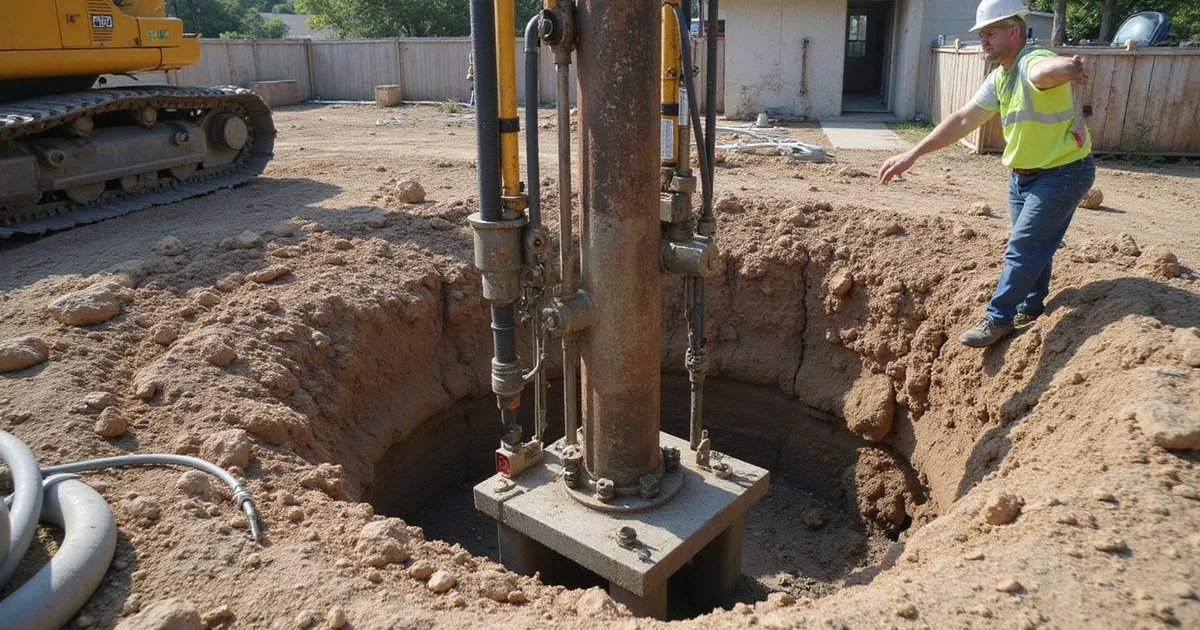
A steel pier system transfers building load from unstable near-surface soil down to a deeper layer that resists penetration.
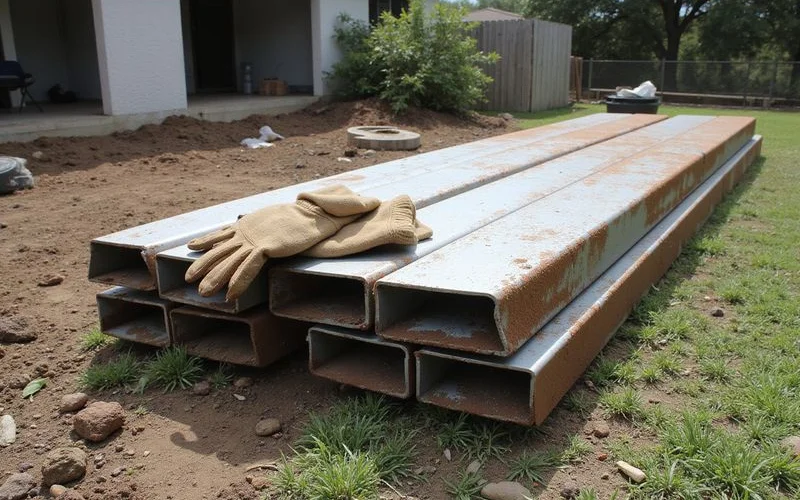
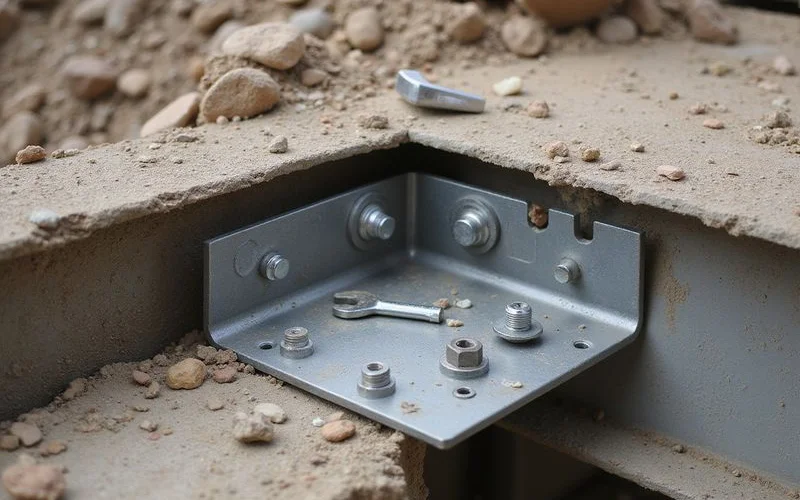
Sections of steel pipe are driven into the ground using the structure’s own weight as reaction — a bracket fixed to the foundation provides the anchor, and a hydraulic ram pushes each section down. When one section is fully advanced, the next is added, and the process continues until the pier meets refusal.
Once installed, load is transferred from the foundation through the bracket, down the pier shaft, to the bearing layer. Our repair methods page covers how this sits alongside the alternatives.
Driven to Refusal
This phrase appears in nearly every steel pier proposal and it is worth understanding precisely.
Refusal is the point at which the pier stops advancing because it has met material that resists further penetration under the available force. Installation pressure is monitored during the drive, and refusal is defined against a threshold.
Two implications follow.
Depth is discovered, not decided. The soil determines where the pier stops. Two piers ten feet apart on the same property can reach refusal at meaningfully different depths, and that is normal rather than a problem. It is also why an honest proposal cannot promise a final depth in advance, and why depth is a genuine cost variable.
Premature refusal is a real risk. A pier can meet resistance from an obstruction — a buried slab, an old footing, construction debris, a boulder — rather than from a genuine load-bearing stratum. A pier stopped on an obstruction has not reached the layer it needs, and the load it transfers may not be supported by material that will hold.
Distinguishing the two takes attention to how installation pressure develops rather than simply noting that the pier stopped. It is a legitimate question to ask any contractor: how do you distinguish genuine refusal from an obstruction?
How Load Is Actually Carried
Two mechanisms contribute.
End bearing — the pier tip resting on the resisting layer, carrying load directly onto it.
Skin friction — resistance along the shaft as it passes through soil, contributing to capacity along its length.
The balance between them varies with the soil profile. In deep clay profiles, skin friction along a long shaft can contribute substantially.
Where Steel Piers Suit Houston Conditions
Deep bearing layers. Where the bearing layer sits well below the active zone, a driven system reaches it without a drilling operation of the same depth.
Tight access. The excavation footprint per location is modest. On narrow side yards, zero-lot-line properties, and sites with hardscape close to the foundation, that matters.
Variable depth across a site. Because depth is determined by refusal rather than planned, the system adapts naturally to a soil profile that varies across a lot.
Immediate loading. No cure time. Once installed, the pier can take load.
Installation feedback. Pressure monitoring during the drive gives real-time information about what the pier is encountering.
The Limits
Stated plainly, because a proposal should name them.
Obstructions cause premature refusal. Covered above, and it is the main technical risk.
Corrosion. Steel in soil corrodes. Proper systems specify corrosion protection — galvanising or equivalent — and it is reasonable to ask what is specified and what the manufacturer documentation covers.
Uplift on the shaft. Expansive clay does not only act downward. Swelling soil exerts upward force along the pier shaft, and installation detailing has to account for it.
Cost rises with depth, and depth is not fully knowable in advance. Ask how a proposal handles depth risk — whether it is carried by the contractor or billed as an extra.
It stabilises a location, not a lot. The clay between and around pier locations continues to swell and shrink. Piers are not a moisture-control system.
It does not address regional movement. No pier system resolves regional subsidence or fault-related ground movement.
Questions to Ask About a Steel Pier Proposal
- Why was this system selected for my property specifically?
- What does it not do well here?
- Will installed depth and pressure be recorded at each location?
- How do you distinguish genuine refusal from an obstruction?
- What corrosion protection is specified?
- Who carries the depth risk if refusal is deeper than expected?
- What does the warranty cover, and what does it exclude?
Our comparison worksheet turns these into a checklist across every proposal you hold.
Steel or Concrete?
Both are used routinely in Houston, and neither is universally better. The steel versus concrete piers comparison sets out the tradeoffs, and the concrete pier systems guide covers the alternatives in the same detail as this page.
What matters is not which system a contractor prefers, but whether they can explain why it fits your property.