
Two Systems Under One Heading
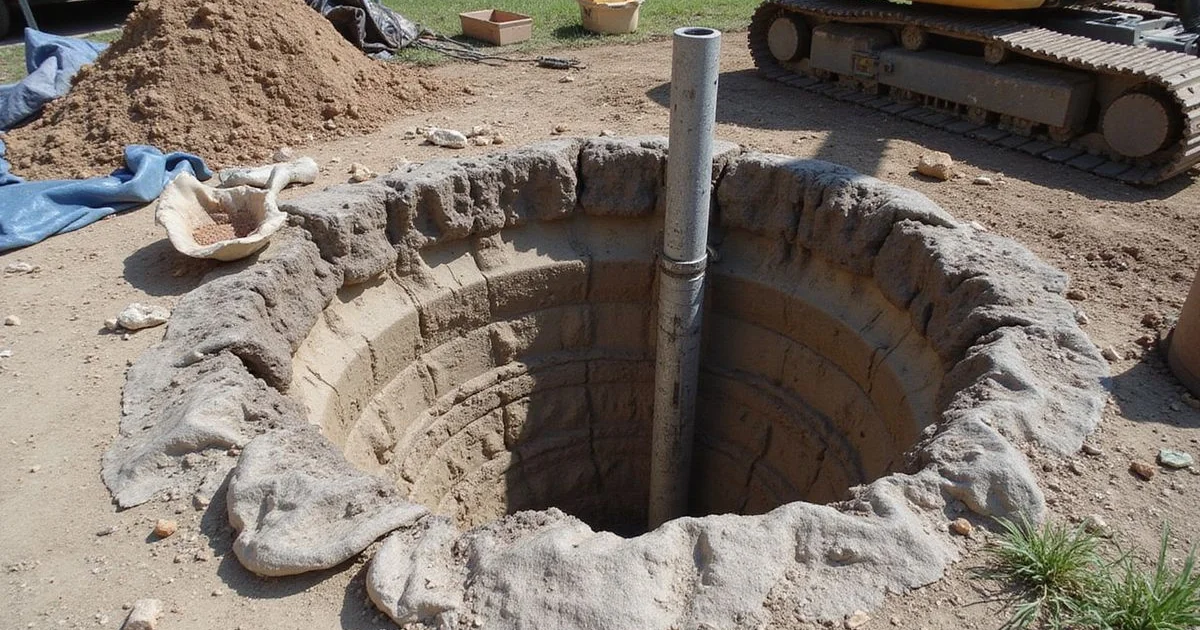
“Concrete piers” covers two quite different things, and proposals often use the term without saying which.
Drilled bell-bottom piers are excavated to a planned depth with a widened base, reinforced, and poured in place.
Pressed concrete pilings are precast cylinder segments driven hydraulically into the ground in sequence.
Same material, very different installation, and different behaviour. Our repair methods page covers how both sit alongside steel systems.
Drilled Bell-Bottom Piers
How they are installed
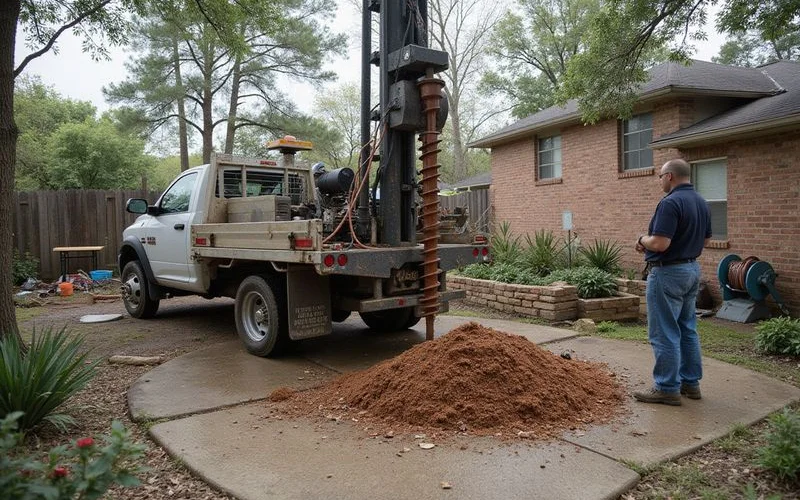
A shaft is drilled to a planned depth using an auger. At the base, the hole is belled — widened to a larger diameter than the shaft. A reinforcement cage is placed, and concrete is poured. Once cured, a cap transfers load from the foundation to the pier.
The bell
The widened base is the defining feature. A larger bearing area spreads the load across more soil at the bearing depth, which can be an advantage where bearing capacity is a consideration. It also provides resistance to uplift, which matters in expansive clay where swelling soil pushes upward along the shaft.
Depth
Planned rather than discovered. The target depth comes from local knowledge, experience with the area, and any geotechnical information available for the site. That is a judgement made in advance, which is a meaningful difference from a driven system where refusal determines depth.
Strengths
- Widened bearing base spreads load at depth
- Cast in place, so the shaft conforms to the excavation
- Bell provides uplift resistance
- Well established across the Houston area with a long track record
Limits
- Requires room to operate a drilling rig and handle spoil
- Cure time before the pier can take load
- Depth is planned rather than confirmed by resistance
- Groundwater complicates the excavation and the pour
- Larger excavation footprint per location
Pressed Concrete Pilings
How they are installed
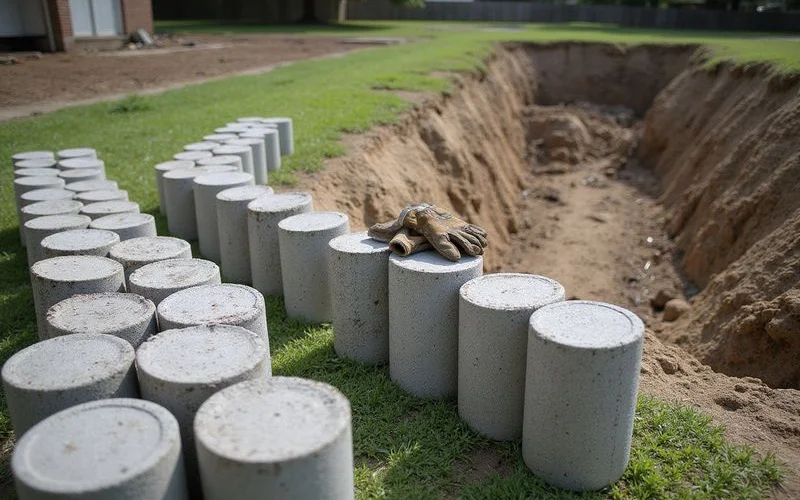
Precast concrete cylinder segments are driven hydraulically into the ground in sequence, using the structure’s weight as reaction. Segments stack as the pile advances, continuing until resistance is reached.
Strengths
- Fast installation with no cure time, since segments are precast
- Modest excavation footprint
- Cost-effective where conditions suit
- Relatively clean operation with minimal spoil
Limits
- Less depth control than a driven steel system, and less than a planned drilled depth
- No widened bearing base
- Segments can misalign if not driven carefully, which affects capacity
- Suited to conditions where the bearing layer is within reach of the available driving force
- No shaft continuity in the way a poured pier has
Side by Side
| Drilled bell-bottom | Pressed pilings | |
|---|---|---|
| Formed | Poured in place | Precast segments driven |
| Depth | Planned in advance | Determined by driving resistance |
| Bearing | Widened bell at base | Segment end bearing |
| Uplift resistance | Bell contributes | Limited |
| Cure time | Yes, before loading | None |
| Excavation footprint | Larger | Modest |
| Spoil | Significant | Minimal |
| Speed | Slower | Faster |
| Access needs | Drilling rig access | Modest |
What Both Share
Neither stops the clay moving. Soil between and around pier locations continues to swell and shrink with moisture. A pier stabilises the point it is installed at.
Neither addresses regional ground movement. Subsidence and fault activity are regional phenomena no residential system resolves.
Both need to reach below the active zone. The depth at which seasonal moisture change stops driving meaningful volume change is what a pier system is trying to get past. A pier bearing within the active zone is bearing on material that still cycles.
Both need proper load transfer detailing at the connection to the foundation.
Choosing Between Concrete and Steel
Neither concrete system is inherently better or worse than a driven steel system. The factors that decide it are soil profile and likely bearing depth, load at each location, required spacing, obstructions, access, and how quickly the site needs to be back in normal condition.
Our steel versus concrete comparison works through the tradeoffs, and the steel pier systems guide covers that alternative in the same detail.
Questions to Ask
- Which concrete system is being proposed — drilled or pressed?
- What depth is planned, and what is that based on?
- For pressed pilings: how is refusal assessed, and how is misalignment prevented?
- For drilled piers: what bell diameter, and what reinforcement?
- Will installed depth be recorded per location?
- How does the design account for uplift in expansive clay?
- What cure time affects the schedule?
A contractor who can answer those is reasoning about your property. One who cannot is quoting a template.