
The Short Answer
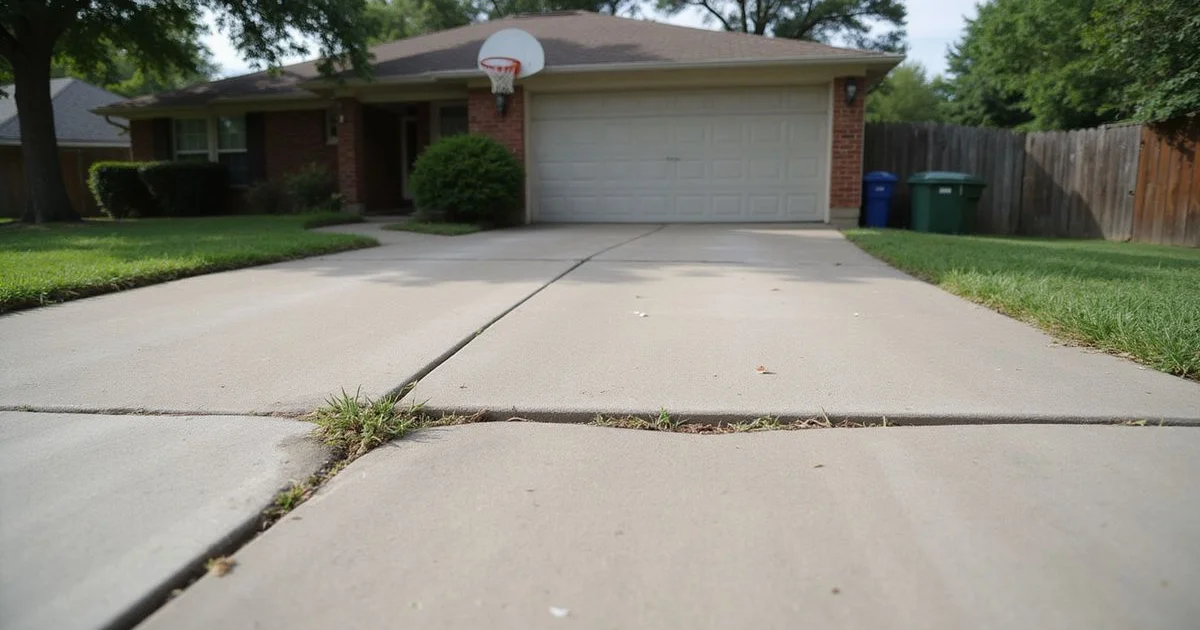
Often, yes. Lifting settled flatwork is routine work and it is usually less expensive and less disruptive than demolition and replacement.
But not always, and a contractor who lifts everything regardless of condition is not doing you a favour. Two questions decide it: is the slab sound enough to lift, and has the cause of the settlement stopped.
Our concrete leveling page covers the service; this guide covers the suitability question.
Question One: Is the Slab Sound Enough?
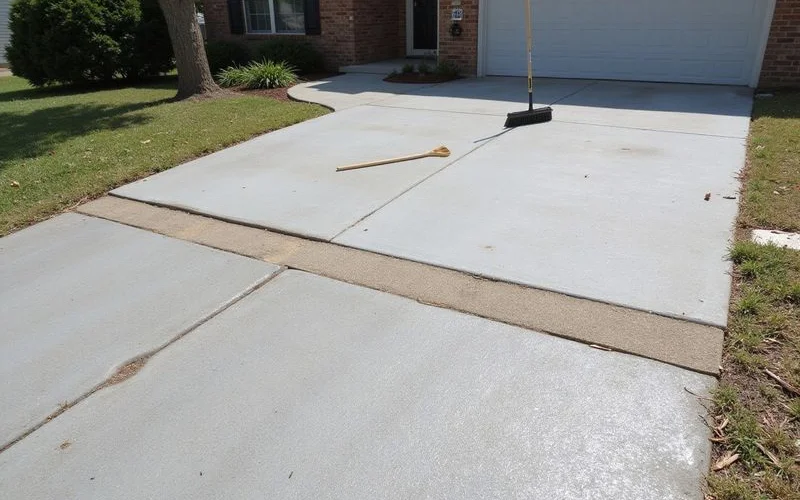
Lifting works by filling the void beneath a slab and raising it. That only works if the slab holds together while it moves.
Good candidates:
- A panel with a clean settlement and one or two tight cracks
- Reinforced concrete in reasonable condition
- Slabs of adequate thickness for their use
- Settlement that is a dip or a tilt rather than a break-up
Poor candidates:
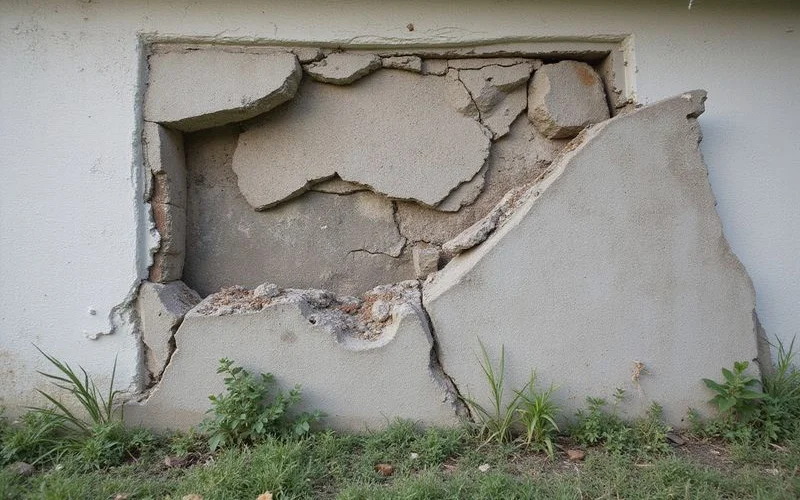
- Concrete broken into several separate pieces
- Crumbling, spalling, or flaking surfaces indicating deterioration
- Exposed and corroded reinforcement
- Thin, unreinforced slabs poured decades ago
- Slabs that have already been lifted repeatedly and are fatigued
A slab in the second list will not rise as a unit. It will break up further, and you will have paid for lifting and then paid for replacement.
Question Two: Has the Cause Stopped?
A void beneath a slab formed for a reason. If the reason is still operating, filling the void gives you a temporary result.
Causes that are typically resolved or self-limiting:
- Original fill consolidating, which slows over time
- A one-off washout from a since-repaired leak
- Settlement following construction that has largely finished
Causes still operating:
- Water running under the slab from a downspout, a drainage path, or surface flow
- An active plumbing or irrigation leak
- Ongoing erosion along a channel
- Seasonal clay shrinkage that will recur every dry summer
Where the cause is still active, the honest recommendation is to address it — drainage work, a leak repair, a downspout extension — before or alongside the lift.
What Can Be Lifted
Common candidates across Houston properties:
- Driveways and driveway approaches, including individual settled panels
- Sidewalks and walkways, particularly where a lip has become a trip hazard
- Patios, including sections that have tilted back toward the house
- Pool decks, where backfill around the shell has consolidated
- Garage floors
- Porch slabs and steps
- Air-conditioning pads and shed slabs
What Cannot Be Lifted This Way
- Your house foundation. Structural foundation work is a different service using different methods. Flatwork leveling and slab foundation repair are not interchangeable.
- Structurally failed concrete, as above.
- A slab where the underlying support is fundamentally inadequate rather than simply voided.
How Much Lift Is Achievable
Meaningful lifts are routine. The constraint is not the equipment; it is the slab.
The greater the lift, the more the slab has to flex as it rises, and at some point it cracks rather than moves as a unit. A modest correction across a panel is straightforward. A large lift on a thin, older slab is asking a lot of it.
The assessment establishes what is realistic for the slab you have, and the scope states the expected outcome rather than implying perfection.
Cost Compared With Replacement
Lifting avoids demolition, haul-off, disposal, subgrade preparation, forming, pouring, finishing, and cure time. It is usually substantially less expensive and the surface is back in service far sooner — the same day with foam. Which lifting method suits a given slab is a separate question, covered in polyurethane foam jacking versus mudjacking.
The honest comparison is between lifting a suitable slab and replacing it. Lifting an unsuitable slab and then replacing it anyway is not a saving.
What the Assessment Looks At
- Slab condition: cracking pattern, surface deterioration, thickness, reinforcement
- Extent and shape of the settlement
- Apparent cause and whether it is still operating
- Drainage fall, and whether lifting will preserve or destroy it
- Access for equipment and hoses
- Surface finish, where patch visibility matters
- Proximity to the structure and whether the settlement relates to foundation movement
That last point matters. Flatwork sitting against a house that has settled toward it may be independent flatwork settlement, or it may be a symptom of foundation movement. If it is the latter, a foundation evaluation is the right next step rather than a lift.
The Drainage Detail
Flatwork was poured with a fall, usually carrying water away from the house. Lifting a slab to “level” in the literal sense can destroy that fall and start directing water at your foundation.
We check the intended fall before lifting and confirm it afterward. On a patio or walk against the house, restoring proper fall away from the structure is frequently the main benefit rather than a side effect.